

Introduction
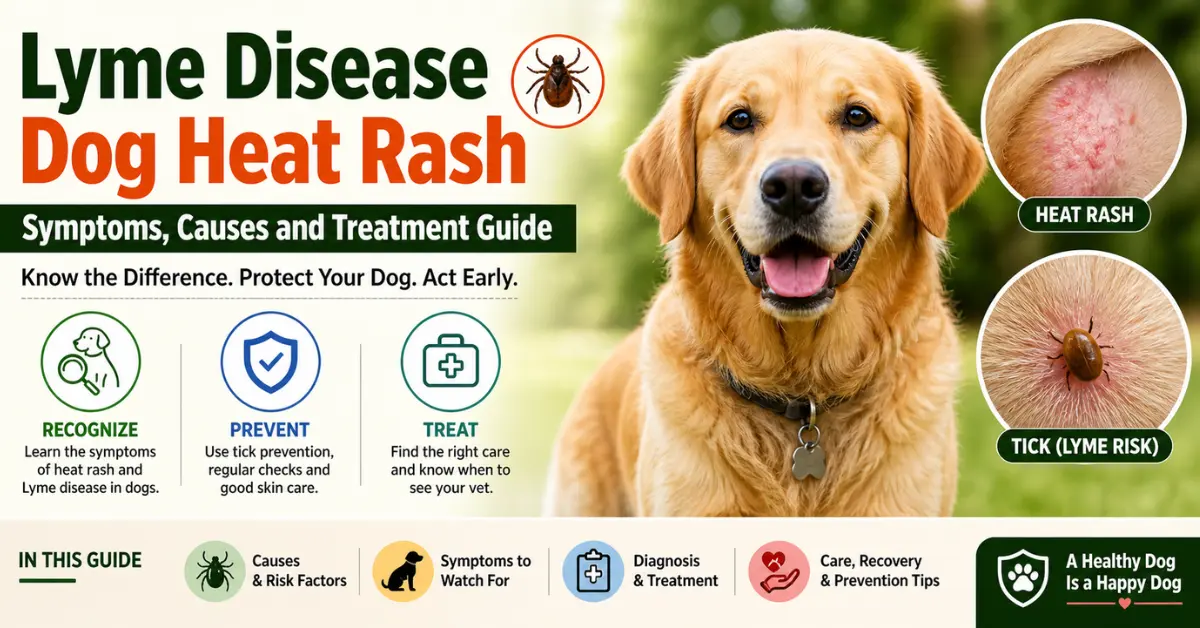
Many dog owners search for lyme disease dog heat rash after they notice red skin on their pet. It can be confusing and worrying, especially after outdoor walks or playtime. You might think it is something serious right away.
The truth is simple. Heat rash and Lyme disease are not the same. One is a skin issue caused by heat and moisture, while the other is a disease spread by tick bites.
This guide will help you understand both clearly. You will learn how to tell the difference, what signs to watch, and what steps to take to keep your dog safe.
What Is Lyme Disease Dog Heat Rash?
The phrase “lyme disease dog heat rash” is something many people search when they see red or irritated skin on their dog. It sounds like one condition, but it actually mixes two different problems. Understanding each one helps you make better decisions for your dog.
Lyme disease is a bacterial illness spread by ticks, while heat rash is a skin issue caused by heat and moisture. They can happen around the same time, especially after outdoor activity, which is why they get confused.
Let’s break them down in simple terms so you know exactly what you are dealing with.
Lyme disease in dogs
Lyme disease in dogs is caused by bacteria called Borrelia burgdorferi. It spreads when an infected tick bites a dog and stays attached long enough to pass the infection.
Most dogs do not show signs right away. When symptoms appear, they usually include limping, fever, low energy, and loss of appetite. Some dogs may also have swollen joints and discomfort while moving.
This disease affects the body, not just the skin. That is why it needs proper medical treatment from a vet.
Heat rash in dogs
Heat rash in dogs happens when the skin gets too hot and moist. Sweat, friction, and lack of airflow can irritate the skin and cause redness.
It often appears on the belly, armpits, groin, or skin folds. You may see red patches, small bumps, or itching. Dogs may lick or scratch the area more than usual.
Heat rash is usually not serious if treated early. Keeping the skin clean, dry, and cool helps it heal faster.
Are they the same?
No, they are not the same. Lyme disease and heat rash are completely different problems.
Lyme disease comes from infected ticks and affects the whole body. Heat rash comes from heat and moisture and only affects the skin.
Also, dogs usually do not get the classic bullseye rash that humans get with Lyme disease. So if you see a rash, it is more likely caused by heat, irritation, or another skin issue, not Lyme disease.
How It Works
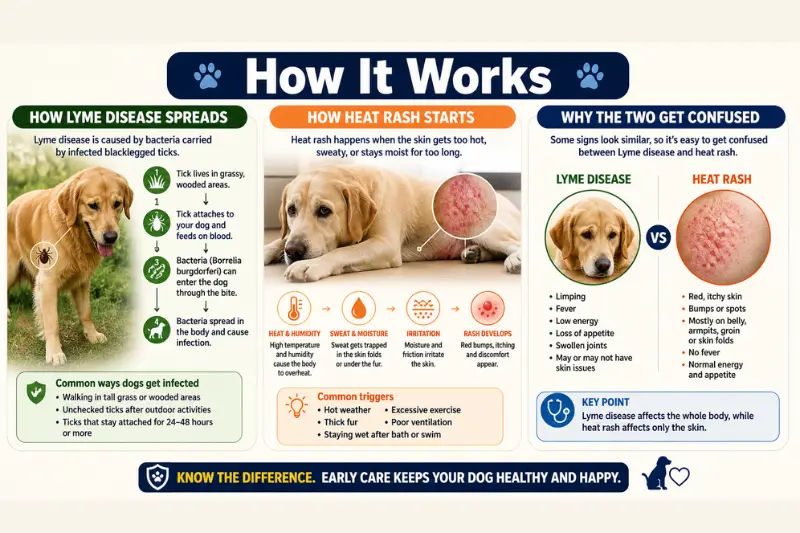
Understanding how each problem starts makes things much clearer. Lyme disease and heat rash can both appear after outdoor time, but their causes are very different.
One comes from a tick bite and spreads inside the body. The other comes from heat and moisture affecting the skin surface.
Let’s look at each one step by step.
How Lyme disease spreads
Lyme disease spreads through the bite of an infected black-legged tick. The tick attaches to the dog’s skin and slowly feeds on blood.
The bacteria usually pass into the dog after the tick stays attached for about one to two days. That is why quick removal of ticks is very important.
After infection, symptoms may not appear right away. It can take weeks or even months before signs like limping, fever, or low energy show up.
How heat rash starts
Heat rash starts when your dog’s skin stays hot, sweaty, and damp. This creates irritation, especially in areas with poor airflow.
Common spots include the belly, armpits, groin, and skin folds. Dogs with thick fur or extra skin are more likely to get it.
Things like hot weather, humidity, swimming, and not drying the dog properly can all lead to heat rash.
Why the two get confused
Both issues often happen after a dog spends time outside. A dog may come back with a tick bite and also have red or irritated skin.
This makes owners think the rash is caused by Lyme disease. In reality, the rash is usually from heat, moisture, or skin irritation.
Also, many people expect Lyme disease to cause a visible rash like in humans. But dogs usually do not show that kind of rash, which adds to the confusion.
Why It Is Needed to Know the Difference
Knowing the difference between heat rash and Lyme disease helps you take the right action at the right time. Both can start after outdoor activity, but they need very different care.
If you treat the wrong problem, your dog may not get better. In some cases, the condition can even get worse without proper care.
That is why it is important to understand what your dog is showing and act quickly.
Heat rash may need skin care
Heat rash is usually a mild skin issue if caught early. You can often manage it by keeping the area clean, cool, and dry.
Simple care like gentle cleaning, drying skin folds, and improving airflow can help the rash heal. Avoid letting your dog lick or scratch the area too much.
If the rash spreads, becomes painful, or shows signs of infection, then a vet visit is needed.
Lyme disease needs a vet
Lyme disease is not just a skin problem. It affects your dog’s joints and overall health.
Signs like limping, fever, low energy, and poor appetite need medical attention. A vet may run tests and give antibiotics to treat the infection.
Without proper treatment, Lyme disease can lead to long-term joint pain and other serious issues.
Waiting too long can make things worse
Ignoring early signs can lead to bigger problems. A simple heat rash can turn into a skin infection if left untreated.
Lyme disease can become more serious over time, especially if it affects the kidneys or joints.
Step-by-Step Guide
If you notice a rash or anything unusual on your dog’s skin, do not panic. Follow these simple steps to check the problem and decide what to do next.
These steps will help you understand whether it looks like heat rash or something more serious like Lyme disease.
Step 1: Check your dog’s skin
Start by looking closely at your dog’s skin. Focus on areas where rashes often appear.
Check the belly, armpits, groin, skin folds, neck, and under the collar. Look for redness, small bumps, swelling, or moist patches.
Also notice if your dog is licking, scratching, or acting uncomfortable in those areas.
Step 2: Look for ticks
Run your hands slowly through your dog’s fur. Feel for small bumps that could be ticks.
Pay extra attention to hidden spots like behind the ears, between toes, under the tail, and around the neck.
Ticks can be very small, so take your time and check carefully after outdoor walks.
Step 3: Compare symptoms
Now try to match what you see with common signs.
If it looks like heat rash, you may notice red skin, itching, small bumps, and irritation in warm areas.
If it looks like Lyme disease, your dog may show limping, fever, low energy, loss of appetite, or swollen joints.
Step 4: Remove ticks safely
If you find a tick, remove it right away using a tick remover or fine-tipped tweezers.
Grab the tick close to the skin and pull it out slowly and straight. Do not twist or crush it.
Avoid using oil, heat, or chemicals, as these can increase the risk of infection.
Step 5: Call your vet if symptoms appear
If your dog shows signs like limping, fever, weakness, or loss of appetite, contact your vet.
Also call your vet if the rash spreads, becomes painful, or does not improve in a few days.
Getting help early can prevent bigger health problems and keep your dog safe.
Types / Methods / Features
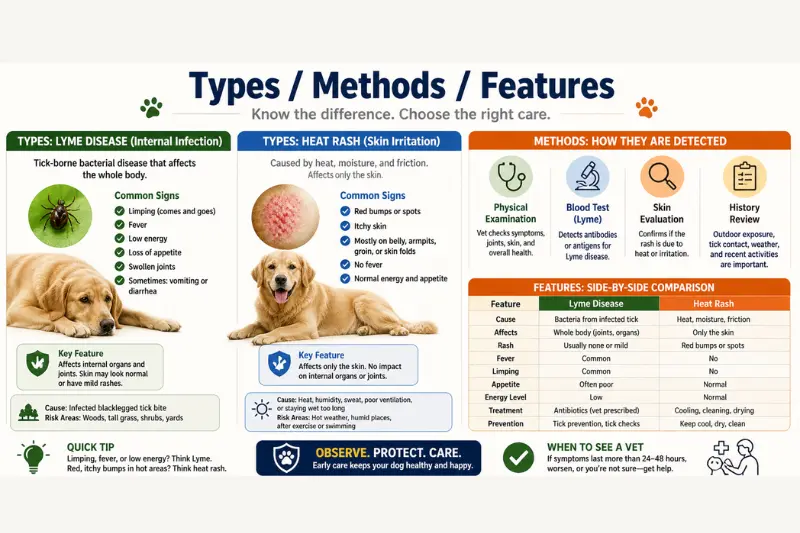
Dogs can show different kinds of skin problems and body signs. Knowing the type helps you understand what your dog needs.
Some issues stay on the skin, like heat rash. Others, like Lyme disease, affect the body and need medical care.
Let’s break this into simple parts so you can spot the difference faster.
Types of dog skin rash
Dogs can get many kinds of rashes, and each has a different cause.
Heat rash happens from heat and moisture. It shows as red, irritated skin with small bumps, usually in warm areas like the belly or folds.
Hot spots are moist and painful patches. They spread fast and are often caused by scratching, licking, or infection.
Allergic rash can come from food, dust, pollen, or fleas. It often looks like small bumps or hives and causes itching.
Tick bite irritation may leave a small red bump. This is usually mild and goes away on its own.
Bacterial or fungal rash can appear if the skin stays wet or damaged. These may smell bad, spread, or look more severe.
Types of Lyme disease signs in dogs
Lyme disease signs are different because they affect the body, not just the skin.
Joint-related signs include limping and stiffness. The limping may move from one leg to another.
Fever signs include feeling warm, tired, and less active than usual.
Appetite changes happen when your dog eats less or refuses food.
Energy loss shows when your dog seems weak or not interested in normal activities.
Kidney-related signs are rare but serious. These include vomiting, weight loss, and swelling.
Prevention methods
Preventing both heat rash and Lyme disease is easier than treating them.
For ticks and Lyme disease:
- Use vet-approved tick prevention products
- Check your dog daily after outdoor time
- Avoid tall grass and wooded areas
- Keep your yard clean and trimmed
For heat rash:
- Keep your dog cool during hot weather
- Provide shade and fresh water
- Dry your dog after bathing or swimming
- Groom regularly to improve airflow
Simple daily care can protect your dog from both skin problems and tick-related diseases.
Real-Life Examples
Real-life situations make it easier to understand the difference between heat rash and Lyme disease. These examples show what you might see and what it usually means.
Each case is simple and based on common situations dog owners face.
Example 1: Heat rash after a summer walk
A dog goes for a long walk on a hot day. Later, the owner notices red skin on the belly and under the legs.
The dog is scratching and licking the area, but still eating, playing, and acting normal. There is no limping or fever.
This is most likely heat rash caused by heat, sweat, and friction during the walk.
Example 2: Tick bite with limping weeks later
A dog had a tick removed after playing in grass. At that time, everything seemed fine.
After a few weeks, the dog starts limping and seems tired. The limping moves from one leg to another, and the dog eats less.
This pattern is more likely linked to Lyme disease and needs a vet check.
Example 3: Rash after swimming
A dog spends time swimming and stays wet for a long time. Later, red bumps appear under the belly and in skin folds.
The skin feels moist, and the dog keeps licking the area. There are no signs like fever or weakness.
This is likely a rash caused by moisture and poor drying, not Lyme disease.
Benefits
Understanding the difference between Lyme disease and heat rash helps you take better care of your dog. It gives you confidence and helps you act quickly when something looks wrong.
When you know what signs to look for, you can avoid confusion and make the right choice for your dog’s health.
Here are the main benefits:
- Less confusion
You can tell if it is a simple skin issue or something more serious. - Faster action
You know when to treat at home and when to call a vet. - Better health for your dog
Early care prevents problems from getting worse. - Avoid unnecessary panic
Not every rash means a serious disease like Lyme. - Save time and money
You avoid wrong treatments and extra vet visits. - Improved comfort for your dog
Quick care reduces itching, pain, and stress. - Better prevention habits
You stay consistent with tick checks and skin care.
Knowing this information helps you stay prepared and keeps your dog safe, happy, and healthy.
Common Problems / Mistakes
Many dog owners make simple mistakes when they see a rash or think about Lyme disease. These mistakes can delay the right care and make the problem worse.
Knowing these common errors helps you avoid them and protect your dog better.
Mistake 1: Thinking every rash is Lyme disease
Not every rash means Lyme disease. Most dogs with Lyme disease do not even show a clear rash.
Heat, moisture, or allergies are more common causes of skin problems.
Mistake 2: Ignoring limping or behavior changes
Some owners focus only on the skin and ignore other signs.
Limping, low energy, fever, or loss of appetite can be serious warning signs and should not be ignored.
Mistake 3: Using human creams or home remedies
Human creams may harm your dog’s skin or make the condition worse.
Always use pet-safe products or ask your vet before applying anything.
Mistake 4: Not drying the dog properly
Leaving your dog wet after bathing or swimming can lead to heat rash or infection.
Moist skin creates the perfect place for bacteria to grow.
Mistake 5: Covering the rash tightly
Bandages or wraps can trap heat and moisture.
This can slow healing and make the rash worse instead of better.
Mistake 6: Skipping tick checks
Not checking your dog after outdoor time increases the risk of tick bites.
Ticks are small and easy to miss, so daily checks are very important.
Mistake 7: Waiting too long to seek help
Some owners wait and hope the problem goes away.
If symptoms get worse or new signs appear, delaying care can lead to serious issues.
Avoiding these mistakes helps you take the right steps early and keeps your dog safe and comfortable.
Future Trends
Dog health care is changing as more owners learn about ticks, skin problems, and outdoor risks. This is helpful because many dog owners still confuse heat rash with Lyme disease.
In the future, pet care will focus more on early prevention, simple education, and better tools for keeping dogs safe.
More tick risk awareness
More dog owners are learning that ticks can be found in grass, parks, wooded areas, and even backyards.
This means people will pay more attention after walks, hikes, and outdoor play. Daily tick checks will become a normal part of dog care.
As tick risk becomes better known, more owners will ask vets about Lyme disease signs, tick prevention, and safe tick removal.
Better pet prevention products
Tick prevention products are also improving. Owners now have more choices, such as collars, chewables, spot-on treatments, and sprays.
These products can help reduce the risk of tick bites when used correctly. A vet can suggest the safest option based on your dog’s age, size, health, and lifestyle.
Future products may become easier to use and may last longer, making protection simpler for busy pet owners.
More vet-led online education
More vets are sharing helpful pet care advice online. This helps owners learn the difference between common skin problems and serious health signs.
Simple online guides, videos, and vet blogs can teach owners what heat rash looks like, how ticks spread disease, and when to call a vet.
This trend is good for dog health because clear information helps owners act sooner and avoid wrong treatments.
FAQs
Can Lyme disease cause heat rash in dogs?
No, Lyme disease does not usually cause heat rash. Heat rash comes from heat and moisture, while Lyme disease is a tick-borne illness that affects the body.
Do dogs get a bullseye rash from Lyme disease?
Dogs usually do not get the bullseye rash seen in humans. That is why Lyme disease in dogs is harder to notice early.
What are the first signs of Lyme disease in dogs?
Common early signs include limping, fever, low energy, and loss of appetite. Some dogs may also have swollen joints.
Can a tick bite cause a rash on a dog?
Yes, a tick bite can leave a small red bump or irritation. This does not always mean Lyme disease.
How long after a tick bite do symptoms appear?
Symptoms may appear weeks or even months after the tick bite. This delay makes it harder to link the problem to the bite.
How can I tell if it is heat rash or something serious?
Heat rash usually shows as red, itchy skin in warm areas. If your dog also has limping, fever, or low energy, it may be something more serious.
When should I take my dog to the vet?
Take your dog to the vet if you see limping, fever, weakness, loss of appetite, or a rash that spreads or gets worse.
Can heat rash go away on its own?
Mild heat rash can improve if the skin is kept clean, cool, and dry. If it does not improve, a vet visit is needed.
Can dogs spread Lyme disease to humans?
Dogs do not spread Lyme disease directly. However, they can carry ticks into the home, which may bite humans.
How can I prevent Lyme disease and heat rash?
Use tick prevention products, check your dog daily, avoid tall grass, keep your dog cool, and dry the skin after bathing or swimming.
Conclusion
Lyme disease dog heat rash may sound like one issue, but they are very different. Heat rash is a skin problem caused by heat and moisture, while Lyme disease is a tick-borne illness that affects your dog’s body.
If your dog only has mild redness or itching, it is often heat rash and can improve with simple care. But if you notice limping, fever, low energy, or loss of appetite, you should contact your vet as soon as possible.
The best approach is to stay alert. Check your dog after outdoor time, use tick prevention, and keep their skin clean and dry. These simple habits can help keep your dog safe, healthy, and comfortable.
