

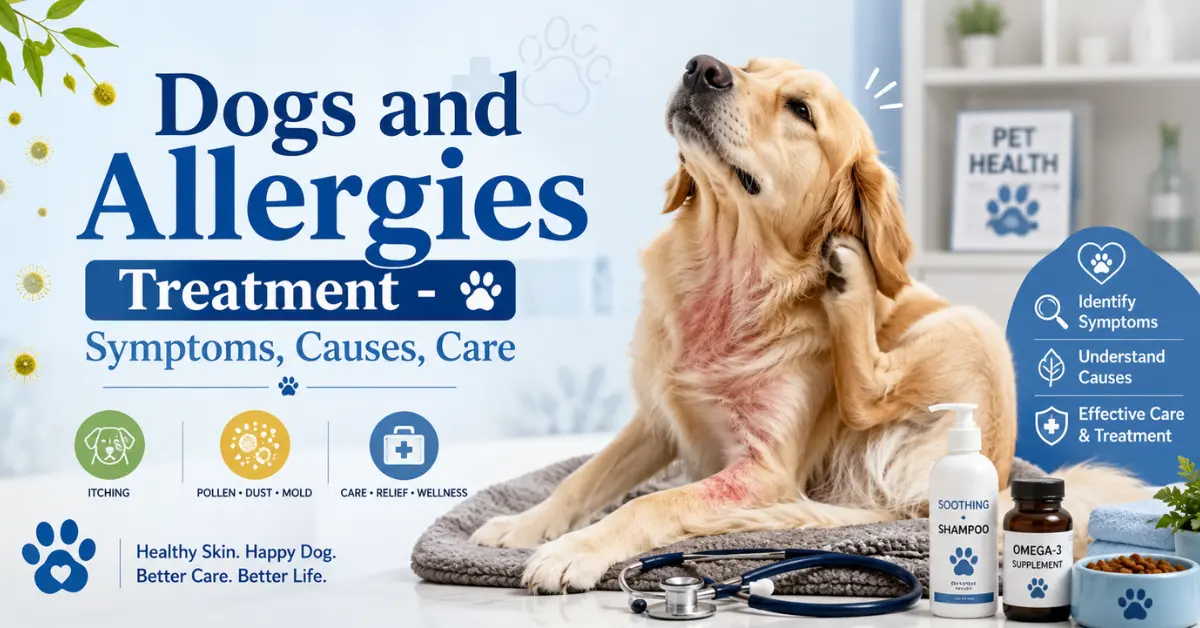
Dogs can get allergies just like people. Your dog may scratch, lick paws, rub the face, or get red skin. Some dogs also get ear infections, hair loss, or stomach problems. This can worry any pet owner.
Dogs and allergies treatment starts with one simple step: finding the cause. Your dog may react to fleas, food, pollen, dust, mold, or other triggers. The right care depends on the real reason behind the allergy.
This guide explains dogs and allergies treatment in simple words. You will learn symptoms, causes, safe home care, medicine options, food tips, and vet warning signs. The goal is to help you support your dog in a safe and smart way.
What Is Dogs and Allergies Treatment?
Dogs and allergies treatment means caring for a dog whose body reacts badly to something harmless. This trigger can be food, flea bites, dust, pollen, grass, mold, or shampoo.
An allergy happens when the immune system reacts too strongly. The immune system protects the body from germs. But during an allergy, it treats a normal thing like a danger. This can lead to itching, swelling, red skin, ear problems, or stomach upset.
Most dog allergies affect the skin and ears. Many dogs scratch the same area again and again. Some lick their paws until they turn red. Others shake their head because their ears feel sore.
For example, a dog may play in the garden and later scratch all night. Another dog may eat chicken and then get itchy ears. These signs help you and your vet find the cause.
Good dogs and allergies treatment does not mean guessing. It means checking symptoms, removing triggers, and using safe care.
Common Symptoms of Dog Allergies
Dog allergy signs can look small at first. But they can get worse if you ignore them. The most common signs include itchy skin, paw licking, red skin, hair loss, and ear infections. Competitor sources also list vomiting, loose stools, hives, face swelling, sneezing, and chronic ear trouble as possible allergy signs.
Look for these signs:
- Constant scratching
- Paw licking or chewing
- Red or hot skin
- Ear smell or ear shaking
- Hair loss
- Rashes or bumps
- Vomiting or diarrhea
- Face rubbing on carpet or furniture
Here’s a real-life example. Your dog sleeps well most nights. Then spring starts, and your dog begins licking paws after walks. This may point to grass or pollen allergy.
Another example is food. Your dog eats a new treat, then gets itchy ears and soft stool. That may suggest a food reaction.
Dogs and allergies treatment works best when you track signs early. Write down food, walks, shampoo, treats, and flea control dates.
Main Causes of Dog Allergies
The cause of dog allergies can change from one dog to another. Some dogs react to fleas. Some react to food. Others react to dust, pollen, mold, or grass.
The three common allergy groups are:
Flea Allergies
One flea bite can cause strong itching in some dogs. You may not even see fleas. Dogs can still react to flea saliva.
Food Allergies
Food allergies often link to proteins like chicken, beef, dairy, or eggs. Grain allergies can happen, but they are less common.
Environmental Allergies
These include pollen, dust mites, mold, grass, and plant fibers. Some dogs itch more in spring or summer. Others itch all year because dust mites stay indoors.
This is why dogs and allergies treatment should match the cause. Flea care will not fix a food allergy. A diet change will not stop pollen allergy.
Ask yourself: Did symptoms start after a new food, season, shampoo, bed, or park visit? Your answer can help your vet.
How Dogs and Allergies Treatment Works
Dogs and allergies treatment works in three main ways. First, you find the trigger. Second, you reduce contact with that trigger. Third, you treat the symptoms safely.
For fleas, your vet may suggest regular flea control. For food allergies, your vet may suggest a food trial. A food trial means your dog eats a special diet for several weeks. This helps check if food causes the problem.
For environmental allergies, your vet may suggest baths, paw cleaning, allergy medicine, or allergy testing. Allergy testing helps find triggers like pollen or dust. Some dogs may need long-term care because outdoor triggers can return every year.
Home care can help, too. You can wipe your dog’s paws after walks. You can wash bedding often. You can use a vet-approved shampoo. You can also keep your home clean to lower dust and dander.
Good care takes time. Most dogs do not improve in one day. But steady care can reduce itching, infections, and stress.
Step-by-Step Guide to Dogs and Allergies Treatment
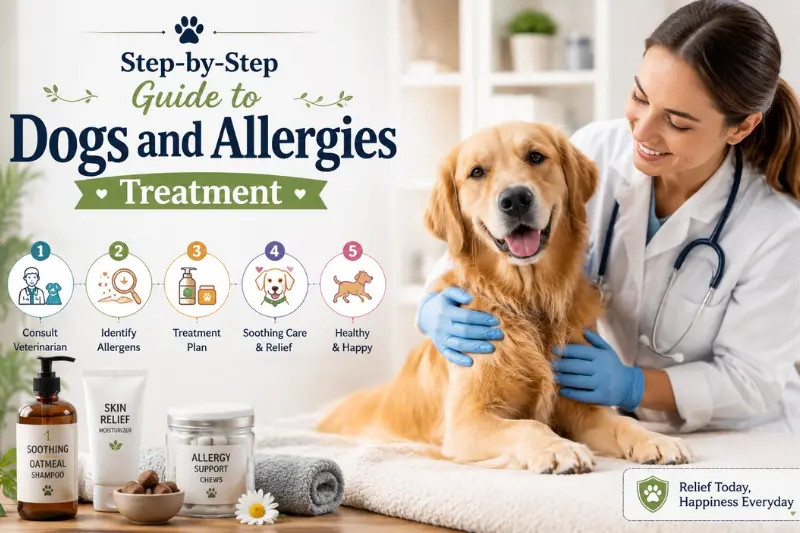
Use this simple plan before things get worse.
Step 1: Check the Symptoms
Look at the skin, paws, ears, belly, and face. Note redness, smell, swelling, or hair loss.
Step 2: Write Down Changes
Did you change food, treats, shampoo, flea medicine, or walking area? Write it down.
Step 3: Stop Unsafe Guessing
Do not give human medicine without a vet. Some human medicines can harm dogs.
Step 4: Control Fleas
Use vet-approved flea control. Wash bedding and clean sleeping areas.
Step 5: Clean Paws and Coat
After walks, wipe paws with a damp cloth. This can remove pollen and dirt.
Step 6: Call the Vet
If itching lasts more than a few days, call your vet. Your dog may need medicine or tests.
This step-by-step dogs and allergies treatment plan helps you act early. It also gives your vet better details. Better details often lead to faster answers.
Safe Home Care Tips for Dogs and Allergies Treatment
Home care can support your dog, but it should not replace vet care when symptoms look serious. Use simple and safe steps.
Try these tips:
- Wash your dog’s bed weekly.
- Vacuum carpets and sofas often.
- Wipe paws after walks.
- Use a mild, vet-approved shampoo.
- Keep grass and dust away when possible.
- Use flea control on schedule.
- Avoid strong perfumes and harsh cleaners.
If your dog has itchy paws, clean them gently after outdoor time. Dry them well because wet paws can grow yeast. Yeast can cause smell, redness, and more licking.
If your dog scratches after baths, check the shampoo. Some products can dry the skin. Ask your vet for a gentle shampoo.
A simple example: A dog scratches every night after sleeping on an old blanket. Washing the blanket or changing it may reduce itching.
Dogs and allergies treatment works better when home care stays consistent. Small daily habits can make a big difference over time.
Dog Allergy Medicine and Vet Treatment Options
Some dogs need medicine to feel better. Your vet may suggest different options based on the cause and severity.
Common options include:
- Anti-itch medicine to reduce scratching
- Antibiotics for skin infections
- Ear drops for ear infections
- Antifungal medicine for yeast
- Medicated shampoo for itchy skin
- Flea medicine for flea allergy
- Special diet for food allergy
- Allergy shots or drops for long-term allergy control
Do not choose medicine on your own. Dogs need the right dose based on weight, age, and health. A safe dose for one dog may hurt another dog.
A vet may also check for mites, infection, or other skin problems. These can look like allergies. That is why testing matters.
Dogs and allergies treatment often needs more than one step. For example, a dog with flea allergy may also need skin infection treatment. Treating only fleas may not heal infected skin fast enough.
Foods That May Trigger Dog Allergies
Food can trigger allergy signs in some dogs. The most common signs include itchy ears, paw licking, skin redness, vomiting, or diarrhea.
Possible food triggers include:
- Chicken
- Beef
- Dairy
- Eggs
- Lamb
- Wheat
- Soy
Food allergy does not always start right after a new meal. Some dogs eat the same food for months before signs appear. This can confuse pet owners.
A vet may suggest an elimination diet. This means your dog eats one special food and no extra treats for a set time. You must follow the plan strictly. Even one small treat can affect the result.
Here’s an example. Your dog eats a special vet diet, but your child gives chicken treats. The itching continues. You may think the diet failed, but the treat caused the problem.
For safe dogs and allergies treatment, do not change food again and again without a plan. Too many changes can upset your dog’s stomach and make the cause harder to find.
When You Should Visit a Vet
You should visit a vet when symptoms last, spread, or look painful. Mild itching can happen sometimes. But constant scratching needs care.
Call your vet if your dog has:
- Severe itching
- Open sores
- Bad skin smell
- Ear discharge
- Head shaking
- Face swelling
- Vomiting with weakness
- Diarrhea that continues
- Hair loss
- Red, hot, painful skin
Get urgent help if your dog has trouble breathing, collapses, or has major face or throat swelling. Severe allergic reactions can become dangerous. AKC notes that anaphylactic shock can happen in rare cases and needs fast emergency care.
Do not wait too long. Scratching can break the skin. Broken skin can lead to bacterial or yeast infection.
Strong dogs and allergies treatment starts with early action. A vet can find the cause, reduce pain, and stop the problem from getting worse.
Common Mistakes in Dogs and Allergies Treatment
Many owners make simple mistakes because they want quick relief. These mistakes can slow healing.
Avoid these common problems:
- Giving human medicine without asking a vet
- Using harsh shampoo
- Stopping flea control too early
- Changing food too often
- Ignoring ear infections
- Letting the dog keep licking paws
- Waiting until skin becomes infected
Another mistake is thinking no fleas means no flea allergy. Some dogs react to one bite. You may never see the flea.
Some owners also try many home remedies from the internet. This can hurt the skin or delay real care. Natural does not always mean safe.
Ask yourself: Is my dog improving, or just scratching less for a few hours? Real healing means less redness, less licking, better sleep, and healthier skin.
Dogs and allergies treatment needs patience. The goal is not quick guessing. The goal is safe, steady relief.
FAQs About Dogs and Allergies Treatment
What is the best dogs and allergies treatment?
The best treatment depends on the cause. Flea allergy needs flea control. Food allergy needs a diet plan. Environmental allergy may need baths, medicine, and cleaning.
Can I treat dog allergies at home?
You can support mild cases with paw cleaning, clean bedding, and flea control. But you should call a vet if symptoms continue or look painful.
What food causes most dog allergies?
Common triggers include chicken, beef, dairy, and eggs. Your vet can guide a proper food trial.
How do I know if my dog has skin allergies?
Look for scratching, paw licking, red skin, hair loss, ear problems, or face rubbing.
Are dog allergies curable?
Many allergies need long-term care. You can often control signs with the right plan, but some triggers may return.
Conclusion
Dogs and allergies treatment works best when you find the cause and act early. Your dog may react to fleas, food, pollen, dust, mold, or other triggers. Watch for itching, paw licking, red skin, ear problems, hair loss, vomiting, or diarrhea.
Start with safe home care. Keep bedding clean, wipe paws, control fleas, and avoid harsh products. But do not guess for too long. A vet can check your dog, treat infections, and suggest the right medicine or diet plan.
The best dogs and allergies treatment gives your dog comfort and protects the skin from bigger problems. With steady care, many dogs can feel calmer, sleep better, and enjoy daily life again.
