

Introduction
Seeing your dog’s face swollen can feel scary. It may happen suddenly or grow slowly over time. Many dog owners search for home remedies for dog swollen face because they want quick help at home. But here’s the thing. Not all swelling is the same. Some cases are mild, while others can turn serious very fast.
A swollen face in dogs can come from allergies, bee stings, tooth infection, injury, or even a deeper health problem. In some cases, the swelling may also affect the throat and breathing, which needs urgent care. That’s why it is important to act fast and make the right decision.
This guide will help you understand what causes facial swelling in dogs, what safe steps you can take at home, and when you should call a vet right away. You will also learn what not to do, so you do not make the problem worse.
If your dog has trouble breathing, looks weak, or the swelling is spreading fast, do not wait. Get veterinary help immediately.
What Is Dog Facial Swelling?
Dog facial swelling means your dog’s face looks puffy, bigger, or uneven. It can happen suddenly, like after a bee sting, or slowly over time, like with a tooth infection or growth. The swelling is the body’s reaction to something wrong, such as an allergy, injury, or infection.
Sometimes the swelling is mild and goes away quickly. Other times, it can be painful and may affect your dog’s eating, breathing, or behavior. That’s why it is important to watch closely and act early.
Common Signs of a Swollen Face in Dogs
You can often spot facial swelling easily if you know what to look for:
- Puffy or enlarged muzzle
- Swollen eyelids or around the eyes
- One side of the face looks bigger than the other
- Red or warm skin
- Hives or small bumps
- Drooling more than usual
- Trouble eating or chewing
- Pain when touching the face
- Your dog rubbing or scratching the face
Some dogs may also act quiet, tired, or restless because they feel uncomfortable.
Areas of the Face That Can Swell
Swelling can appear in different parts of your dog’s face. Each area may give a clue about the cause:
- Muzzle (nose area): often linked to allergies, bee stings, or bug bites
- Around the eyes: can swell from allergic reactions or infections
- Cheeks: may point to a tooth abscess or dental problem
- Jaw: can swell due to injury, infection, or bone issues
- Under the eye: often a sign of a tooth infection
- Neck or throat area: very serious, may affect breathing
Knowing where the swelling is can help you understand what might be causing it and how urgent the situation is.
How Dog Face Swelling Happens
Dog face swelling happens when the body reacts to something harmful or irritating. This reaction causes fluid to build up in the tissues under the skin. As a result, the face looks puffy or larger than normal.
The most common reason is the immune system. When your dog’s body thinks something is dangerous, like a bee sting or certain food, it releases chemicals. These chemicals increase blood flow and cause fluid to leak into nearby tissues. That’s what creates swelling.
Swelling can also happen due to infection. For example, a tooth abscess or wound can fill with pus. This builds pressure and causes one side of the face to swell.
Injuries are another cause. If your dog gets hit, bitten, or scratched, the body sends extra blood to the area to heal it. This can lead to visible swelling.
In some cases, growths like cysts or tumors may slowly increase in size. This type of swelling usually develops over time, not suddenly.
Sudden Swelling vs Slow Swelling
- Sudden swelling: Often linked to allergies, bee stings, bug bites, or reactions to food or medicine. It appears quickly, sometimes within minutes or hours.
- Slow swelling: Usually caused by dental problems, infections, cysts, or tumors. It develops over days or weeks.
Body Reaction Behind Swelling
Here’s what happens inside the body in simple steps:
- The body detects a trigger (allergen, injury, infection)
- It sends signals to protect itself
- Blood vessels expand in that area
- Fluid leaks into the tissues
- Swelling appears on the face
This process is meant to protect your dog, but sometimes it can cause discomfort or even danger if it affects breathing or spreads quickly.
Why Dog Facial Swelling Is Important
A swollen face in dogs is not something to ignore. It may look small at first, but it can turn serious very fast. The face is close to the mouth, throat, and airway. If the swelling spreads, it can make breathing hard for your dog.
In many cases, swelling is caused by an allergic reaction. Some reactions stay mild, but others can become severe within minutes. This type of reaction can affect the whole body and may be life-threatening if not treated quickly.
Swelling can also be a sign of a deeper problem. A tooth infection, wound, or abscess can cause pain and spread infection if left untreated. In rare cases, slow swelling may point to a growth that needs medical care.
That’s why using home remedies for dog swollen face should only be a short-term step for mild cases. You still need to watch your dog closely and contact a vet if things do not improve.
When It Becomes Dangerous
Facial swelling becomes dangerous when it affects your dog’s ability to breathe, eat, or stay active. Quick changes are a big warning sign.
Watch out if:
- Swelling grows very fast
- The neck or throat looks puffy
- Your dog is breathing heavily or struggling
- Your dog cannot open its mouth properly
- There is severe pain or crying
These signs mean the problem may be more than just a simple allergy.
Emergency Warning Signs You Must Know
Call a vet right away if you see any of these:
- Trouble breathing
- Blue, pale, or gray gums
- Vomiting or diarrhea
- Weakness or collapse
- Seizures
- Rapid swelling spreading across the face
- Swelling near the throat or neck
These symptoms can point to a severe allergic reaction or serious illness. Quick action can save your dog’s life.
Step-by-Step Guide: What to Do First at Home
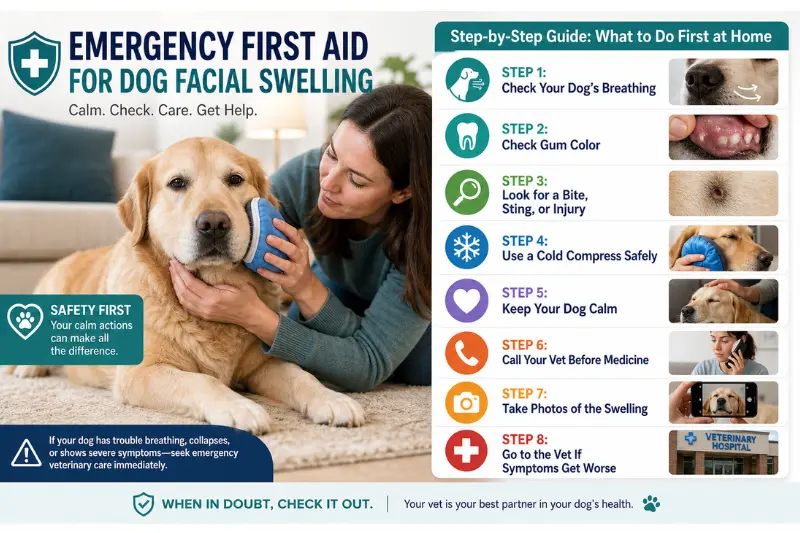
When your dog’s face looks swollen, stay calm and act carefully. Your first job is to check if your dog is safe. Home care can help in mild cases, but it should never delay vet care if symptoms look serious.
Step 1: Check Your Dog’s Breathing
Watch your dog closely. Look at the chest, mouth, and nose.
Call a vet immediately if your dog:
- Struggles to breathe
- Breathes loudly
- Pants heavily without reason
- Has swelling near the throat
- Seems weak or confused
Breathing problems are an emergency.
Step 2: Check Gum Color
Lift your dog’s lip gently and look at the gums.
Healthy gums are usually pink. Pale, blue, gray, or white gums can be a danger sign. If the gums look unusual, get emergency vet help.
Step 3: Look for a Bite, Sting, or Injury
Check the swollen area gently. Do not press hard.
Look for:
- Bee sting
- Bug bite
- Scratch
- Wound
- Blood
- Broken tooth
- Bad smell from mouth
If you see a wound, infection, or tooth problem, call your vet.
Step 4: Use a Cold Compress Safely
For mild swelling, place a cool, damp cloth on the area for a few minutes.
Do not place ice directly on your dog’s skin. Do not press hard. Stop if your dog feels pain or pulls away.
Step 5: Keep Your Dog Calm
Move your dog to a quiet place. Keep them away from other pets and children.
Do not let your dog scratch or rub the face. This can make swelling worse.
Step 6: Call Your Vet Before Medicine
Do not give human medicine without vet advice. Some painkillers and allergy medicines can harm dogs.
Ask your vet what is safe for your dog’s size, age, and health.
Step 7: Take Photos of the Swelling
Take clear photos from the front and side. This helps you see if the swelling is growing.
You can also share photos with your vet if they ask.
Step 8: Go to the Vet If Symptoms Get Worse
Go to the vet if swelling spreads, your dog seems painful, or symptoms do not improve.
Home remedies for dog swollen face are only for mild support. They do not treat infections, tooth abscesses, snake bites, tumors, or severe allergic reactions.
Types and Causes of Dog Swollen Face
A dog’s face can swell for many reasons. Some causes are mild, while others need fast medical care. Knowing the type of swelling can help you understand what might be going on.
Allergic Reaction (Most Common Cause)
This is the most common reason for sudden swelling. It can happen after:
- Bee stings
- Bug bites
- New food
- Medicine or vaccines
- Pollen or dust
Swelling usually appears fast, often around the muzzle and eyes. You may also see itching, hives, or redness.
Bee Sting or Bug Bite
A single sting or bite can make the face swell quickly. Dogs often get stung while playing outside.
Signs include:
- Sudden swelling
- Pain when touched
- Pawing at the face
Most mild cases improve, but watch for breathing problems.
Dental Abscess or Tooth Infection
This often causes swelling on one side of the face, especially under the eye.
Other signs:
- Bad breath
- Trouble eating
- Drooling
- Pain when chewing
This type of swelling will not go away with home care. It needs dental treatment.
Injury or Trauma
Swelling can happen after a hit, fall, or bite from another animal.
You may notice:
- Bruising
- Cuts or wounds
- Pain when touched
Injuries can also lead to infection if not treated.
Abscess or Infection
An abscess is a pocket of pus caused by infection. It can grow under the skin and cause swelling.
Signs include:
- Warm or soft swelling
- Pain
- Fever
- Lethargy
This needs vet care and often antibiotics.
Tumor or Cyst
These usually grow slowly over time.
You may see:
- Firm lump
- Gradual swelling
- No sudden pain at first
Any new lump should be checked by a vet.
Snake Bite or Toxin Exposure
In some areas, snake bites can cause fast and severe swelling, often around the face or muzzle.
Other signs:
- Sudden pain
- Weakness
- Bleeding
- Trouble breathing
This is an emergency and needs immediate care.
Home Remedies for Dog Swollen Face
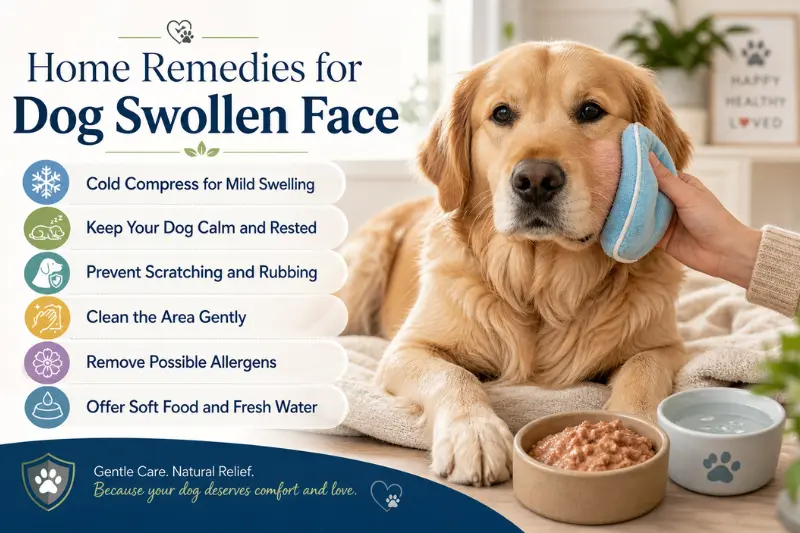
Many dog owners look for home remedies for dog swollen face to help their pet quickly. Here’s the honest truth. Home care can help in mild cases, but it cannot treat serious problems like infections, tooth abscess, or severe allergic reactions. You should always watch your dog closely and call a vet if needed.
Cold Compress for Mild Swelling
A cold compress can help reduce swelling and give comfort.
- Use a clean cloth with cool water
- Gently place it on the swollen area
- Keep it there for 5–10 minutes
- Repeat a few times a day
Do not use ice directly on the skin. Stop if your dog feels pain.
Keep Your Dog Calm and Rested
Stress and movement can make swelling worse.
- Let your dog rest in a quiet place
- Avoid running or playing
- Keep them cool and relaxed
A calm dog heals better and faster.
Prevent Scratching and Rubbing
Dogs often try to scratch or rub their face, which can increase swelling.
- Use an e-collar if needed
- Keep nails trimmed
- Watch your dog closely
This helps avoid more irritation or injury.
Clean the Area Gently
If there is dirt, pollen, or a mild irritant, gentle cleaning may help.
- Use clean water to rinse lightly
- Do not scrub or press hard
- Avoid strong chemicals or soaps
This is helpful if the swelling is from outdoor exposure.
Remove Possible Allergens
Try to reduce contact with anything that may have caused the reaction.
- Wash your dog’s paws after walks
- Keep them away from plants or insects
- Avoid new foods or treats
Small steps like this can prevent the swelling from getting worse.
Offer Soft Food and Fresh Water
If your dog has pain while eating:
- Give soft food instead of hard kibble
- Make sure water is always available
This keeps your dog comfortable until you get proper care.
Call Your Vet Before Giving Medicine
Some people think about giving allergy medicine, but do not do this without advice.
- Human medicines can be harmful
- Dose depends on your dog’s size and health
- Always ask your vet first
When Home Care Is Safe
Home remedies are only safe if:
- Swelling is mild
- Your dog is breathing normally
- No vomiting or weakness
- Your dog is active and alert
When Home Remedies Are NOT Enough
Stop home care and go to a vet if:
- Swelling spreads quickly
- Your dog has trouble breathing
- There is severe pain
- You see pus, blood, or a wound
- Your dog becomes weak or collapses
Home remedies for dog swollen face are just first aid. They help for a short time, but they do not replace proper treatment.
What You Should Never Do
When your dog’s face is swollen, doing the wrong thing can make the problem worse. Some actions may delay proper treatment or even harm your dog. Here are the most important things to avoid.
Avoid Giving Human Medicines
Do not give your dog any human painkillers or allergy pills without asking a vet.
- Medicines like ibuprofen and paracetamol can be dangerous
- Wrong dosage can lead to serious health issues
- Even common allergy drugs are not always safe for every dog
Always call your vet before giving any medicine.
Do Not Ignore Serious Symptoms
Waiting too long is a common mistake.
Do not ignore signs like:
- Trouble breathing
- Fast spreading swelling
- Vomiting or diarrhea
- Weakness or collapse
- Swelling near the throat
These signs need urgent vet care. Do not rely on home remedies in these cases.
Do Not Press, Squeeze, or Pop Swelling
It may be tempting to touch or press the swollen area, but this can cause more harm.
- You can increase pain
- You may spread infection
- An abscess can worsen or rupture
Always leave it for a vet to examine.
Do Not Use Ice Directly on Skin
Direct ice can damage your dog’s skin.
- It can cause irritation or burns
- Dogs may react badly to extreme cold
Use a cool cloth instead of ice.
Do Not Apply Random Home Products
Avoid using oils, creams, or home mixtures without proper guidance.
- Some products can irritate the skin
- Dogs may lick and swallow harmful substances
- It can delay correct treatment
Stick to safe and simple care only.
Real-Life Examples of Dog Face Swelling
Real situations can help you understand what dog face swelling looks like and how to react. Each case is different, so always watch symptoms closely.
Swelling from a Bee Sting
A dog comes back from the garden and suddenly its muzzle looks puffy. The dog keeps rubbing its face and seems uncomfortable.
The owner checks for breathing problems. Everything looks normal. They use a cool cloth on the area and call the vet for advice. The swelling slowly reduces after a few hours.
This is a common mild case, but it still needs monitoring because some reactions can get worse.
Swelling from Tooth Infection
A dog shows swelling under one eye. The swelling grows slowly over a few days. The dog stops eating properly and has bad breath.
The owner first thinks it is an allergy and tries home care, but nothing improves. After a vet visit, it turns out to be a tooth abscess.
The dog needs dental treatment and medicine. This shows that not all swelling can be treated at home.
Severe Allergic Reaction Case
A dog eats something new and within a short time its face swells quickly. The dog starts vomiting and looks weak.
The owner does not wait and takes the dog to the vet immediately. The vet treats it as a serious allergic reaction.
This is an emergency situation where fast action can save the dog’s life.
Swelling from Injury or Bite
A dog gets into a fight with another dog. Later, one side of the face becomes swollen and painful.
There is a small wound that turns into an infection. The dog needs antibiotics and proper care from a vet.
This type of swelling can get worse if ignored.
Swelling from Unknown Cause
Sometimes the cause is not clear at first. A dog may have mild swelling with no obvious reason.
In such cases, the owner watches the dog closely, keeps it calm, and contacts the vet for guidance. If swelling does not improve, a full check-up is needed.
Do Not Delay Vet Visit for Ongoing Swelling
If swelling does not improve within a short time, do not wait.
- Dental problems will not heal at home
- Infections can spread
- Serious conditions need proper diagnosis
Home remedies for dog swollen face are only for short-term help, not a full treatment.
Benefits of Knowing Safe First Aid
Knowing basic first aid for a dog with a swollen face can make a big difference. It helps you stay calm and take the right steps without panic. Even simple actions can protect your dog and prevent the situation from getting worse.
Faster Response
When you know what to do, you act quickly.
- You check breathing right away
- You notice danger signs early
- You take action without delay
Quick response can reduce risk and improve recovery.
Better Communication with the Vet
First aid helps you understand the problem better.
- You can explain symptoms clearly
- You can share when the swelling started
- You can describe changes over time
This helps the vet make faster and more accurate decisions.
Reduced Risk for Your Dog
Safe first aid lowers the chance of making mistakes.
- You avoid harmful medicines
- You do not press or damage the area
- You keep your dog calm and protected
This prevents the condition from getting worse.
Less Stress for You and Your Dog
When you know what steps to take, you feel more in control.
- You stay calm instead of panicking
- Your dog feels safer around you
- You can manage the situation better
A calm environment helps your dog recover faster.
Early Detection of Serious Problems
First aid helps you spot warning signs early.
- You notice breathing trouble
- You see fast spreading swelling
- You detect pain or weakness
This helps you decide when to go to the vet without delay.
Better Short-Term Care at Home
While waiting for vet advice, you can give safe support.
- Use a cold compress properly
- Keep your dog comfortable
- Prevent scratching or rubbing
This keeps your dog stable until proper treatment begins.
Common Problems and Mistakes
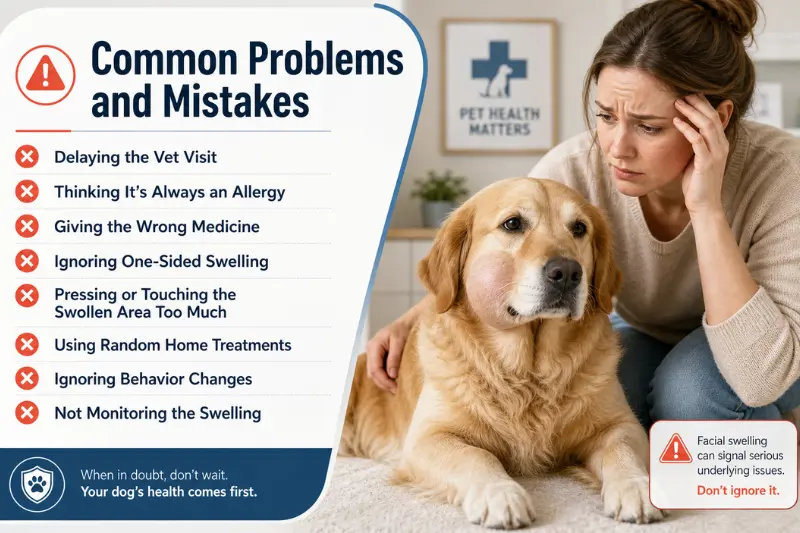
When your dog’s face is swollen, small mistakes can make things worse. Many owners try to help, but without the right steps, the problem can grow. Here are the most common issues to avoid.
Delaying the Vet Visit
Waiting too long is a big mistake.
- Swelling can get worse quickly
- Infections can spread
- Serious conditions may be missed
If swelling does not improve or gets worse, do not wait.
Thinking It’s Always an Allergy
Not all swelling is caused by allergies.
- Tooth infections can look similar
- Injuries and abscesses are common
- Some swelling may be from deeper health issues
Treating everything like an allergy can delay the right care.
Giving the Wrong Medicine
Many owners give medicine without proper advice.
- Human drugs can harm dogs
- Wrong dose can be dangerous
- Some medicines hide symptoms without fixing the cause
Always ask a vet before giving anything.
Ignoring One-Sided Swelling
If only one side of the face is swollen, it often points to a dental problem or abscess.
- This will not heal on its own
- Pain may increase over time
- Infection can spread
This type of swelling needs proper treatment.
Pressing or Touching the Swollen Area Too Much
Trying to check the swelling by pressing it can cause harm.
- It increases pain
- It can spread infection
- It may damage tissues
Handle the area gently and avoid pressure.
Using Random Home Treatments
Using oils, creams, or home mixtures without knowledge can make things worse.
- Some products irritate the skin
- Dogs may lick harmful substances
- It delays proper care
Stick to safe and simple care only.
Ignoring Behavior Changes
Swelling is not the only sign to watch.
- Loss of appetite
- Lethargy
- Hiding or restlessness
These changes show your dog may be in pain or unwell.
Not Monitoring the Swelling
Some owners do not track changes.
- Swelling may spread quickly
- Size may increase
- New symptoms may appear
Always keep an eye on your dog and note any changes.
How Vets Treat Dog Facial Swelling
When your dog’s face is swollen, a vet will first find the exact cause. Treatment depends on what is behind the swelling. The goal is to reduce pain, control swelling, and fix the root problem.
Allergy Treatment
If the swelling is from an allergic reaction, the vet may:
- Give antihistamines
- Use anti-inflammatory drugs
- In severe cases, give emergency injections
The dog is also monitored for breathing problems. The vet may suggest avoiding the trigger in the future.
Infection and Abscess Treatment
If there is an infection or abscess, treatment may include:
- Antibiotics to fight infection
- Cleaning the affected area
- Draining pus if needed
- Pain relief medicines
This helps stop the infection from spreading.
Dental Treatment
If the cause is a tooth problem:
- The vet may do dental X-rays
- Remove infected or damaged teeth
- Clean the mouth
- Prescribe antibiotics and pain relief
Dental issues are a common cause of one-sided face swelling.
Injury or Trauma Treatment
For injuries, the vet may:
- Clean and treat wounds
- Give pain medicine
- Use antibiotics if infection risk is high
- Check for deeper damage with scans
Serious injuries may need surgery.
Tumor or Growth Treatment
If a lump or growth is found:
- Tests like biopsy or scans may be done
- Surgery may be needed to remove it
- Further treatment depends on results
Early diagnosis is very important in these cases.
Emergency Care Methods
If the situation is serious, the vet may act fast with:
- Oxygen support
- IV fluids
- Emergency injections
- Close monitoring
This is common in severe allergic reactions or breathing problems.
How to Prevent Dog Face Swelling
You cannot stop every case of facial swelling, but you can reduce the risk with simple daily care. Small habits can protect your dog from allergies, infections, and injuries.
Avoid Common Allergens
Many cases happen due to allergies.
- Keep your dog away from bees and insects
- Avoid sudden food changes
- Watch for reactions to new treats or medicine
- Limit exposure to pollen and dust during walks
If your dog has known allergies, follow your vet’s advice to manage them.
Maintain Good Dental Care
Dental problems are a major cause of swelling, especially on one side of the face.
- Brush your dog’s teeth regularly
- Use dog-safe dental products
- Give safe chew toys
- Schedule routine dental check-ups
Healthy teeth help prevent painful infections.
Check Your Dog Regularly
Look at your dog’s face often.
- Check for swelling, redness, or lumps
- Watch for bad breath or drooling
- Notice changes in eating habits
Early detection makes treatment easier.
Keep Your Dog Safe Outdoors
Outdoor risks can lead to bites, stings, or injuries.
- Supervise your dog during walks and play
- Avoid areas with snakes or aggressive animals
- Keep your dog on a leash in unsafe places
This reduces the chance of injury or toxin exposure.
Keep Living Area Clean
A clean space helps prevent infections and allergens.
- Wash bedding regularly
- Keep food and water bowls clean
- Remove dust and dirt from your home
This supports overall health.
Stay Up to Date with Vet Visits
Regular vet visits help catch problems early.
- Routine check-ups
- Vaccinations as advised
- Early treatment of small issues
Your vet can guide you based on your dog’s needs.
Watch Reactions After New Changes
Any new food, medicine, or environment can trigger a reaction.
- Introduce changes slowly
- Observe your dog for any swelling or itching
- Act quickly if you see a reaction
Future Trends in Dog Health Care
Dog health care is becoming easier for pet owners to manage. New tools and services can help owners notice problems earlier, get advice faster, and protect their dogs from serious issues.
Better Allergy Testing
More vets now offer allergy testing for dogs. This can help find triggers like food, pollen, dust, or insect bites. When owners know the cause, they can reduce future reactions.
Online Vet Advice
Online vet support is becoming more common. It can help owners decide if a swollen face looks mild or needs urgent care. But online advice should not replace emergency vet treatment.
Smart Pet Health Monitoring
Smart collars and pet trackers can follow activity, sleep, and behavior changes. If a dog becomes less active or restless, owners may notice health problems sooner.
Improved Dental Care
Better dog dental products are now available, such as dog-safe toothpaste, dental chews, and water additives. Good dental care may reduce tooth infections, which can cause face swelling.
More Focus on Emergency First Aid
Pet owners are learning more about first aid. This helps them respond faster to swelling, stings, wounds, and allergic reactions before reaching a vet.
Personalized Vet Care
Vets are using more detailed health records to give dogs care based on age, breed, weight, allergies, and past health issues. This can make treatment safer and more accurate.
FAQs About Dog Swollen Face
What can I give my dog for a swollen face?
Do not give any medicine without asking a vet first. Some allergy medicines may be safe, but the dose depends on your dog’s size and health. Always get advice before giving anything.
Is dog face swelling an emergency?
Sometimes yes. It becomes an emergency if your dog has trouble breathing, fast swelling, weakness, vomiting, or pale gums. In these cases, go to a vet right away.
Can I treat dog face swelling at home?
You can give basic care for mild swelling, like using a cool cloth and keeping your dog calm. But home care is only short-term help. Many cases still need a vet check.
How long does dog face swelling last?
Mild swelling may go down in a few hours to a day. If it lasts longer or gets worse, it may be caused by infection, injury, or another issue that needs treatment.
Why is my dog’s face swollen on one side?
One-sided swelling is often linked to a tooth infection, abscess, or injury. This type usually needs veterinary care and does not improve with home remedies.
Can allergies cause a dog’s face to swell?
Yes, allergies are one of the most common causes. Bee stings, bug bites, food, or medicine can trigger sudden swelling.
Should I use ice on my dog’s swollen face?
Do not apply ice directly. Use a cool, damp cloth instead. Direct ice can irritate your dog’s skin.
When should I take my dog to the vet?
Go to a vet if swelling spreads, your dog is in pain, or symptoms do not improve quickly. Immediate care is needed if breathing is affected.
Can a tooth infection cause face swelling in dogs?
Yes, a tooth abscess can cause swelling, often under the eye or on one side of the face. This needs dental treatment.
Can dog facial swelling go away on its own?
Some mild cases may improve, especially if caused by a small allergic reaction. But you should always monitor your dog closely and seek help if there is no improvement.
Conclusion
A swollen face in dogs should always be taken seriously. It may be something small like a mild allergic reaction, or it could be a sign of a deeper problem such as infection, injury, or dental disease. That’s why you should never ignore it.
Using home remedies for dog swollen face can help for a short time in mild cases. Simple steps like a cold compress, keeping your dog calm, and watching symptoms can give comfort. But these steps do not fix the root cause.
The most important thing is to watch your dog closely. If the swelling gets worse, does not improve, or comes with signs like breathing trouble, weakness, or vomiting, you should go to a vet immediately.
