

Introduction
Dog allergies are very common. Many dogs suffer from itching, licking, and skin problems at some point in their life. This can make them uncomfortable and restless. Some dogs may scratch all day, while others may have red skin, ear infections, or even stomach issues.
Here’s the thing. Dog allergy treatment is not the same for every dog. The cause can be different. Some dogs react to pollen or dust. Others react to fleas or certain foods. That is why finding the real cause is very important before starting any treatment.
What this really means is simple. If you treat the allergy the right way, your dog can feel better fast. If you ignore it, the problem can get worse and lead to infections or pain.
In this guide, you will learn how dog allergy treatment works, safe home remedies, vet medicines, and when you should get help from a vet.
What Is Dog Allergy Treatment?
Dog allergy treatment means helping your dog feel better when their body reacts badly to something in the environment or food. These reactions often cause itching, skin problems, ear infections, or stomach issues. Treatment is not just about stopping the itch. It also focuses on finding the cause and preventing the problem from coming back.
Simple meaning of dog allergies
A dog allergy happens when your dog’s immune system overreacts to something that is usually harmless. This can be dust, pollen, food, or even flea bites. The body treats it like a threat and causes symptoms like itching, redness, licking, and swelling.
Why treatment depends on the cause
Not all allergies are the same. A dog with flea allergy needs flea control. A dog with food allergy needs a diet change. A dog with pollen allergy may need medicine during certain seasons. If you treat the wrong cause, the problem will keep coming back. That is why finding the trigger is the most important step.
Common allergy triggers in dogs
Most dog allergies are caused by a few common things:
- Fleas and flea bites
- Pollen from grass, trees, and flowers
- Dust mites and mold
- Certain foods like chicken, beef, or dairy
- Cleaning products or strong chemicals
Knowing these triggers helps you choose the right dog allergy treatment and keep your dog safe and comfortable.
How Dog Allergy Treatment Works
Dog allergy treatment follows a simple process. The goal is to stop the itching, heal the skin, and prevent the allergy from coming back. It is not just one step. It is a mix of care, control, and prevention.
Find the trigger
The first step is to find what is causing the allergy. This could be fleas, food, dust, or pollen. Without finding the trigger, treatment will not work well. Vets may use diet trials, skin checks, or allergy tests to figure this out.
Control itching
Once the trigger is known, the next step is to reduce itching. This helps your dog feel calm and stops scratching. Treatments may include medicated baths, anti-itch creams, or vet medicines like antihistamines or special injections.
Treat infections
Many dogs get skin or ear infections because of constant scratching. These infections need proper treatment. Vets may use antibiotics, antifungal medicine, or medicated shampoos to heal the skin.
Prevent flare-ups
The final step is long-term care. This means avoiding triggers and keeping your dog clean and healthy. Regular flea control, a proper diet, clean bedding, and sometimes long-term medicine can help stop allergies from coming back.
When all these steps are followed, dog allergy treatment becomes more effective and your dog stays comfortable for a longer time.
Why Dog Allergy Treatment Is Important
Dog allergies may look like a small problem at first, but they can turn serious if ignored. Early treatment helps your dog stay comfortable and healthy.
Prevent skin damage
Constant scratching and licking can break the skin. This can lead to wounds, bleeding, and pain. Treating allergies early helps protect your dog’s skin.
Avoid ear infections
Many dogs with allergies also get ear infections. You may notice bad smell, redness, or head shaking. Proper treatment can stop these infections from coming back again and again.
Stop hot spots and infections
Hot spots are painful, wet areas on the skin caused by too much licking or scratching. These can spread fast. Allergy treatment helps stop this cycle before it gets worse.
Improve your dog’s comfort
A dog with allergies may feel restless all day. They may not sleep well or play like before. Treatment helps reduce itching so your dog can relax and feel normal again.
Prevent long-term problems
If allergies are not managed, they can become a lifelong issue with repeated flare-ups. Early and proper care helps control the problem and reduces future stress for both you and your dog.
Step-by-Step Guide to Treat Dog Allergies
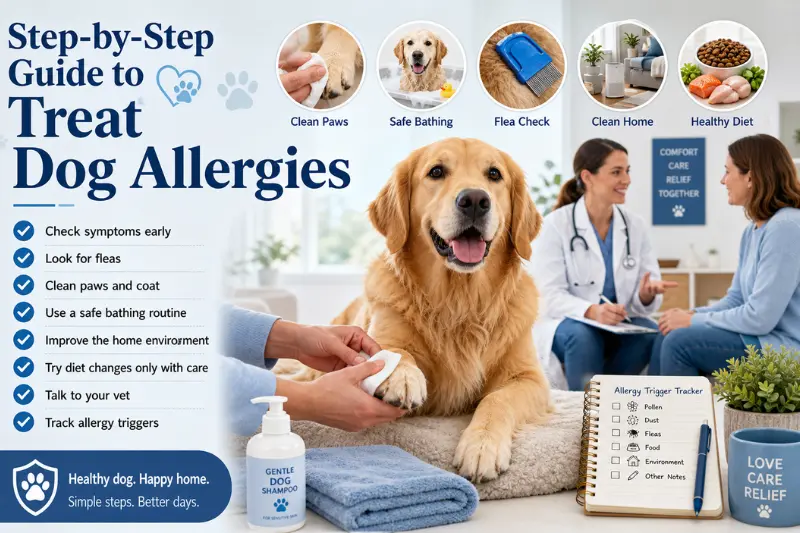
Dog allergy treatment works best when you follow a clear plan. Do not guess or use random medicine. Start with simple checks, then get vet help if symptoms do not improve.
Check symptoms early
Look for itching, paw licking, red skin, hair loss, ear smell, sneezing, watery eyes, or stomach upset. Write down when symptoms started and what changed recently.
Look for fleas
Check your dog’s belly, tail area, neck, and back. Flea dirt looks like tiny black dots. Even one flea bite can cause strong itching in some dogs.
Clean paws and coat
After walks, wipe your dog’s paws, belly, and legs with a damp cloth. This helps remove pollen, dust, and grass from the skin.
Use a safe bathing routine
Use a vet-approved hypoallergenic or oatmeal dog shampoo. Avoid human shampoo because it can dry your dog’s skin. Do not bathe too often unless your vet says so.
Improve the home environment
Wash your dog’s bedding weekly. Vacuum carpets and sofas. Use clean blankets. Keep your dog away from strong cleaners, smoke, and heavy fragrance.
Try diet changes only with care
If food allergy is suspected, your vet may suggest an elimination diet. This means feeding a special diet for several weeks and avoiding treats or table food.
Talk to your vet
Call your vet if itching is severe, skin is bleeding, ears smell bad, swelling appears, or your dog seems weak. Your vet may suggest medicine, allergy testing, or infection treatment.
Track allergy triggers
Keep a simple allergy diary. Note food, weather, walks, flea treatment, baths, and symptoms. This can help find the real cause faster.
Types of Dog Allergy Treatment
Dog allergy treatment is not one-size-fits-all. The type of treatment depends on what is causing the allergy. Each type focuses on removing the trigger and calming the symptoms.
Environmental allergy treatment
This type is used when your dog reacts to pollen, dust, mold, or grass. Treatment may include regular baths, paw cleaning after walks, air filters, and anti-itch medicines. In some cases, vets may suggest allergy shots for long-term control.
Flea allergy treatment
Flea allergy is very common and can cause severe itching from just one bite. Treatment focuses on strict flea control. This includes flea medicines, cleaning your home, washing bedding, and treating all pets in the house.
Food allergy treatment
Food allergies need a diet change. Vets usually suggest an elimination diet with special food. This helps find the ingredient causing the problem. Once identified, that food must be avoided long term.
Seasonal allergy care
Some dogs get allergies only during certain times of the year. Treatment may include short-term medicines, regular baths, and limiting outdoor exposure during high pollen days.
Skin infection treatment
Many dogs with allergies develop bacterial or yeast infections. These need medicated shampoos, creams, or oral medicine from a vet to heal properly.
Long-term treatment plans
Some dogs need ongoing care. This may include medicines like Apoquel or Cytopoint, regular check-ups, and lifestyle changes. The goal is to control symptoms and prevent future flare-ups so your dog stays comfortable.
Best Home Remedies for Dog Allergy Relief
Home care can help reduce itching and keep your dog comfortable. These remedies are simple, but they should be used safely. If symptoms are severe or not improving, you should talk to a vet.
Oatmeal baths
Oatmeal helps calm itchy and irritated skin. Use plain oatmeal or an oatmeal-based dog shampoo. Bathe your dog in lukewarm water for 10–15 minutes to soothe the skin.
Coconut oil for skin
Coconut oil can help reduce dryness and itching. Apply a small amount to affected areas. Do not use too much, as it can make the skin greasy.
Apple cider vinegar rinse
Mix apple cider vinegar with water and use it as a light rinse for paws or skin. It can help control bacteria and reduce itching. Do not use on open wounds or cuts.
Aloe vera gel
Aloe vera has a cooling effect and helps reduce redness. Apply a thin layer on itchy spots. Make sure your dog does not lick it.
Omega-3 supplements
Omega-3 fatty acids support healthy skin and reduce inflammation. Fish oil is a common option. It may take a few weeks to see results.
Probiotics for gut health
Probiotics help balance your dog’s digestion and immune system. This can reduce allergy symptoms over time.
Chamomile tea compress
Cool chamomile tea can be used on a cloth and placed on itchy areas. It helps calm the skin and reduce swelling.
Hypoallergenic shampoo
Use a gentle dog shampoo made for sensitive skin. This helps remove allergens like dust and pollen from the coat.
Keep your dog clean
Wash bedding weekly and clean your dog’s sleeping area. This reduces dust, dirt, and allergens.
Avoid triggers
Limit exposure to things that cause allergies. This may include pollen, grass, certain foods, or cleaning products.
These home remedies can give relief, but they are not a full cure. For long-term control, a proper dog allergy treatment plan is always important.
Dog Allergy Medicine Options
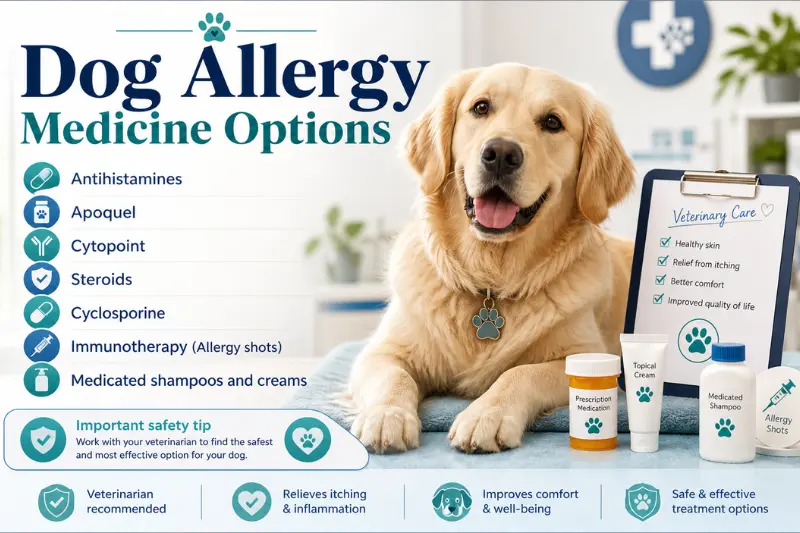
Dog allergy medicines help reduce itching, calm the immune system, and heal the skin. The right medicine depends on how severe the allergy is and what is causing it. Some dogs need simple relief, while others need strong long-term treatment.
Antihistamines
These are mild medicines that help reduce itching and allergic reactions. Common ones include Benadryl, Zyrtec, and Claritin.
They work best for mild allergies or short-term use. However, they do not work for every dog, and results can vary.
Apoquel
Apoquel is a popular prescription medicine for itching and skin inflammation. It works by blocking the signals that cause itching in the body.
Many dogs feel relief within hours to a few days.
It is often used for long-term control of environmental allergies.
Cytopoint
Cytopoint is an injection given by a vet. It targets the main protein that causes itching and helps break the itch cycle.
It usually starts working within 1–2 days and can last for several weeks.
Steroids
Steroids like prednisone are strong anti-inflammatory medicines. They work fast and reduce severe itching.
But they are usually used for short periods because long-term use can cause side effects like weight gain and weakness.
Cyclosporine
Cyclosporine (often sold as Atopica) helps control the immune system. It is used for dogs with long-term allergies that do not improve with other treatments.
It may take a few weeks to show results, but it can be effective for chronic cases.
Immunotherapy (Allergy shots)
This is a long-term treatment that helps train your dog’s immune system. It uses small doses of allergens over time to reduce sensitivity.
It takes months to work but can give lasting results for some dogs.
Medicated shampoos and creams
Topical treatments help clean the skin and reduce itching. These include antifungal, antibacterial, or soothing shampoos.
They are often used along with other medicines for better results.
Important safety tip
Never give human allergy medicine or change doses without a vet. Some drugs can be harmful or even dangerous for dogs.
Using the right mix of these medicines can help control symptoms and keep your dog comfortable long term.
Real-Life Examples of Dog Allergy Treatment
Real cases help you understand how dog allergy treatment works in daily life. Every dog is different, but these simple examples show how the right steps can solve the problem.
Seasonal itching case
A dog starts scratching a lot during spring. The owner notices paw licking and red skin after walks.
The vet confirms it is a pollen allergy. Treatment includes regular paw cleaning, weekly baths, and anti-itch medicine like Apoquel.
After a few weeks, itching reduces and the dog feels comfortable again.
Flea allergy case
A dog keeps biting its tail and lower back. The owner does not see fleas, but the vet finds flea dirt.
The dog has flea allergy. Treatment includes strong flea control for all pets, cleaning bedding, and a short course of anti-itch treatment.
Within days, the itching improves because the main trigger is removed.
Food allergy case
A dog has constant ear infections and stomach upset. Changing shampoo does not help.
The vet suggests an elimination diet. The dog is fed a special diet for several weeks. Chicken is later found to be the trigger.
Once removed from the diet, symptoms slowly disappear.
Chronic ear infection case
A dog shakes its head often and has a bad smell from ears. This keeps coming back.
The vet finds it is linked to allergies. Treatment includes ear drops, cleaning, and long-term control using Cytopoint.
With proper care, ear infections stop returning.
These examples show one key thing. Dog allergy treatment works best when you find the real cause and follow the right plan.
Benefits of Proper Dog Allergy Treatment
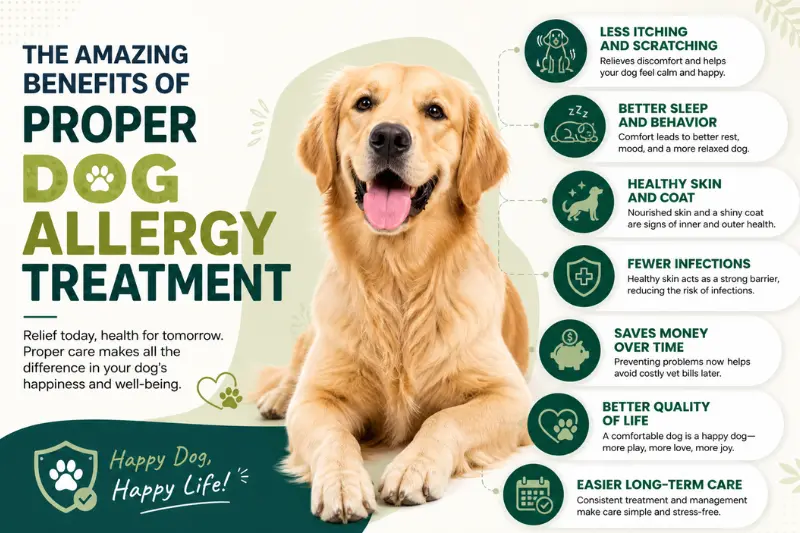
Treating dog allergies the right way makes a big difference in your dog’s health and daily life. It is not just about stopping itching. It helps your dog live a calm and happy life.
Less itching and scratching
Proper treatment reduces constant itching. Your dog will stop scratching, biting, and licking all the time. This gives them quick relief and peace.
Better sleep and behavior
When itching stops, your dog can sleep well. They feel more relaxed and less irritated. You may also notice they become more playful and active again.
Healthy skin and coat
Allergy treatment helps heal damaged skin. Redness, rashes, and hair loss improve over time. Your dog’s coat becomes soft and healthy again.
Fewer infections
When scratching is controlled, the risk of skin and ear infections goes down. This means fewer vet visits and less need for strong medicines.
Saves money over time
Early treatment can prevent serious problems later. This helps reduce long-term costs for repeated vet visits and treatments.
Better quality of life
Your dog feels comfortable, happy, and stress-free. They can enjoy walks, playtime, and rest without constant irritation.
Easier long-term care
Once you know the trigger and treatment plan, managing allergies becomes easier. You can prevent flare-ups and keep your dog stable.
Proper dog allergy treatment is not just a quick fix. It is a long-term care plan that keeps your dog healthy and comfortable every day.
Common Problems and Mistakes
Many dog owners try to treat allergies on their own but make small mistakes that can make things worse. Avoiding these errors can save time, money, and stress for both you and your dog.
Using human medicine without vet advice
Some people give human allergy pills without knowing the correct dose. This can be unsafe. Always ask a vet before giving any medicine.
Ignoring early symptoms
Mild itching or licking may seem normal, but it can be the start of a bigger problem. Waiting too long can lead to infections and pain.
Not controlling fleas properly
Even one flea bite can trigger strong itching in sensitive dogs. Skipping flea treatment or stopping it early can keep the allergy active.
Over-bathing your dog
Bathing too often can dry the skin and make itching worse. Use a proper schedule and only dog-safe shampoo.
Using harsh products
Strong cleaners, perfumes, or chemicals can irritate your dog’s skin. Keep your dog away from such products.
Changing food too quickly
Switching food again and again can confuse the problem. If food allergy is suspected, follow a proper elimination diet with patience.
Not finishing treatment
Stopping medicine early when your dog feels better can cause symptoms to return. Always complete the full treatment plan.
Ignoring ear problems
Ear scratching or bad smell should not be ignored. Ear infections are common with allergies and need proper care.
Using home remedies the wrong way
Some remedies like apple cider vinegar or oils can harm if used too much or on broken skin. Always use them carefully.
Expecting a quick cure
Dog allergies are often long-term. There is no instant cure in many cases. Proper management and consistency are the key.
Avoiding these common mistakes can make dog allergy treatment more effective and help your dog stay comfortable for a long time.
Future Trends in Dog Allergy Treatment
Dog allergy treatment is improving with time. Vets now have better ways to find triggers, control itching, and create long-term care plans for dogs.
Better allergy testing
Future allergy tests may become more accurate and easier to use. This can help vets find triggers faster, such as pollen, dust mites, mold, or grass.
More targeted itch medicines
New medicines may focus on the exact itch signals in a dog’s body. This can give relief with fewer side effects.
Personalized treatment plans
More vets may create allergy plans based on each dog’s age, breed, symptoms, lifestyle, and allergy history. This can make treatment more effective.
Improved prescription diets
Food allergy treatment may become easier with better limited-ingredient and hydrolyzed diets. These diets help dogs avoid problem ingredients.
Stronger focus on skin health
Future care may focus more on the skin barrier. This means keeping the skin strong, moist, and less likely to react to allergens.
Gut health support
Probiotics and gut-friendly diets may play a bigger role in allergy care. A healthier gut may support a better immune response.
Easier long-term care
New products may help dog owners manage allergies at home more safely. This could include better shampoos, sprays, supplements, and tracking apps.
The future of dog allergy treatment looks more personal, safer, and easier for pet owners. The main goal will stay the same: less itching, healthier skin, and a happier dog.
FAQs About Dog Allergy Treatment
What is the best dog allergy treatment?
The best treatment depends on the cause. Some dogs need flea control, others need a special diet, and some need medicine for pollen or dust allergies. A vet can help find the right plan.
Can I treat dog allergies at home?
Yes, mild cases can be managed at home with baths, clean bedding, and avoiding triggers. But if itching is severe or not improving, you should see a vet.
Can I give my dog Benadryl?
Some vets may suggest it, but the dose must be correct for your dog’s size. Do not give it without asking a vet first.
How long does dog allergy treatment take?
It depends on the cause. Some dogs feel better in a few days, while others need weeks or long-term care to control symptoms.
Are dog allergies permanent?
Many allergies are long-term. They cannot always be cured, but they can be managed well with the right treatment plan.
What can I put on my dog’s itchy skin?
You can use oatmeal shampoo, aloe vera, or vet-approved creams. Avoid strong chemicals or human skin products.
When should I take my dog to the vet?
You should see a vet if your dog has severe itching, swelling, bleeding skin, ear infections, or if symptoms keep coming back.
What food is best for dogs with allergies?
Dogs with food allergies may need a limited-ingredient or special prescription diet. Your vet may suggest an elimination diet to find the trigger.
Is Cytopoint better than Apoquel?
Both are effective but work in different ways. Some dogs respond better to one than the other. Your vet will decide what suits your dog.
Can dog allergies go away on their own?
In most cases, no. Without proper care, allergies often get worse. Treatment and prevention are needed to keep your dog comfortable.
Conclusion
Dog allergy treatment is about more than stopping the itch. It is about finding the cause, giving the right care, and preventing the problem from coming back. When you follow the right steps, your dog can feel calm, sleep better, and enjoy daily life again.
Here’s the key point. There is no single fix for every dog. Some need simple home care, while others need long-term vet support. What matters is choosing the right plan for your dog’s condition.
Stay alert to early signs like itching, paw licking, or ear problems. Act early, avoid common mistakes, and follow a consistent routine. This makes a big difference in recovery.
If symptoms are severe or keep coming back, do not wait. A vet can guide you with the right treatment and keep your dog safe.
