

Introduction
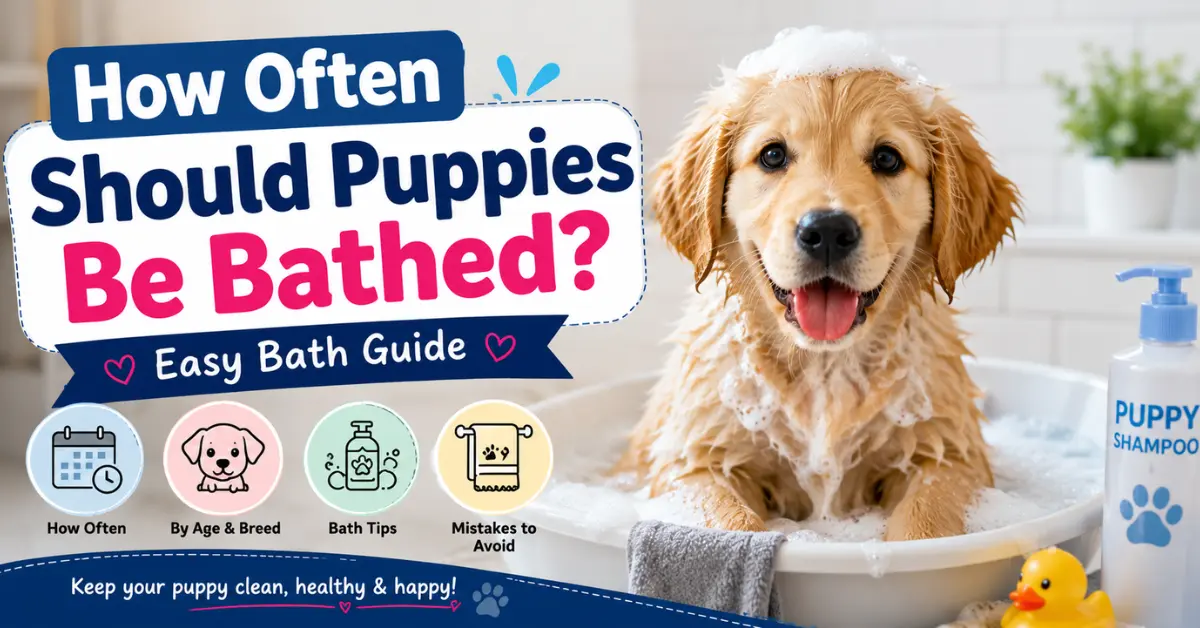
Bringing home a puppy is exciting, but it also comes with many questions. One of the most common questions new dog owners ask is: how often should puppies be bathed? Some people think puppies need frequent baths to stay clean and smell fresh, while others avoid bathing completely because they fear skin problems. The truth is that puppies need a healthy balance.
Bathing too often can dry out your puppy’s sensitive skin and remove natural oils that protect the coat. On the other hand, waiting too long between baths may lead to dirt buildup, bad smells, and skin irritation. The right bathing schedule depends on your puppy’s age, coat type, activity level, and overall health.
In this guide, you will learn the best puppy bathing schedule, signs your puppy needs a bath, common mistakes to avoid, and expert tips that many other articles miss. Whether you have a tiny indoor puppy or an energetic outdoor explorer, this article will help you keep your furry friend clean, healthy, and comfortable.
Why Bathing Your Puppy Matters
Bathing is an important part of keeping your puppy healthy, comfortable, and clean. Puppies love exploring everywhere. They roll in grass, jump into muddy spots, play on dirty floors, and sometimes even step into things that smell terrible. A proper bath helps remove dirt, bacteria, loose fur, and bad odors from their coat.
Regular bathing can also improve your puppy’s skin health. Clean fur allows the skin to breathe better and lowers the chance of irritation caused by dust, pollen, or oil buildup. Puppies with mild allergies may feel more comfortable after a gentle bath because allergens are washed away from the coat.
Bath time is also useful for checking your puppy’s body closely. While washing your puppy, you may notice:
- ticks or fleas
- dry patches
- bumps
- redness
- tangled fur
Finding these problems early can help prevent bigger health issues later.
Another benefit many owners forget is behavior training. Puppies that get used to baths early in life often become calmer during grooming as adults. They learn that water, shampoo, towels, and brushing are normal parts of life.
Still, balance matters. Too many baths can dry the skin and damage the coat. That is why understanding the correct bathing routine is so important for your puppy’s overall health.
The Biggest Mistake Puppy Owners Make
One of the biggest mistakes puppy owners make is bathing their puppy too often. Many people believe frequent baths will keep their puppy cleaner, healthier, and smelling fresh all the time. While good hygiene is important, too much bathing can actually harm your puppy’s skin and coat.
A puppy’s skin produces natural oils that protect the fur and keep the skin soft and healthy. These oils help prevent dryness, itching, and irritation. When puppies are bathed too frequently, those natural oils get washed away. This can leave the skin flaky, dull, and uncomfortable.
Overbathing may cause:
- dry skin
- itching
- redness
- excessive shedding
- dull fur
- skin sensitivity
Some owners also make the mistake of using human shampoo. Human products are made for human skin, which has a different pH level than a dog’s skin. Using the wrong shampoo can increase irritation and make skin problems worse.
Another common mistake is giving a full bath after every small mess. In many cases, a damp cloth or puppy wipe is enough to clean muddy paws or dirty fur between baths.
Instead of bathing on a strict weekly schedule, pay attention to your puppy’s actual needs. A puppy that stays indoors most of the time may need far fewer baths than an active outdoor puppy. The goal is to keep your puppy clean without damaging their natural skin barrier.
How Often Should Puppies Be Bathed?
Most puppies should be bathed every 3 to 4 weeks, but the ideal schedule depends on several factors such as age, coat type, activity level, and skin health. Some puppies stay clean for weeks, while others get dirty after only a few days of outdoor play.
Very young puppies under 8 weeks old usually should not receive full baths unless absolutely necessary. Their bodies are still developing, and they can get cold easily. If a young puppy becomes dirty, use a warm damp cloth for gentle spot cleaning instead of a complete bath.
Here is a simple puppy bathing schedule many vets recommend:
| Puppy Age | Recommended Bath Frequency |
|---|---|
| Under 8 weeks | Avoid full baths unless needed |
| 8–12 weeks | Every 4 weeks |
| 3–6 months | Every 3–4 weeks |
| 6 months and older | Every 1–3 months or as needed |
Puppies with long or thick coats may need slightly more frequent baths because dirt and oils collect faster in their fur. Puppies with short coats usually stay cleaner longer and may need fewer baths.
You should also bathe your puppy sooner if they:
- smell bad
- roll in mud
- get sticky fur
- have allergy buildup
- play outside often
The best approach is to bathe your puppy when they truly need it instead of following a strict schedule. This keeps the coat clean while protecting the natural oils that support healthy skin and soft fur.
Factors That Change Bath Frequency
Not every puppy needs the same bathing schedule. Some puppies stay clean for weeks, while others seem dirty again after one trip outside. Several important factors affect how often puppies should be bathed.
Coat Type
Your puppy’s coat plays a big role in how quickly dirt and oil build up.
- Short-haired puppies usually need fewer baths because their fur traps less dirt.
- Long-haired puppies may need more frequent bathing to prevent tangles and odor buildup.
- Double-coated breeds like Huskies or German Shepherds often need more brushing than bathing.
Indoor or Outdoor Lifestyle
Indoor puppies normally stay cleaner longer. Puppies that spend more time outdoors collect mud, dust, grass, and allergens much faster. Outdoor puppies often need baths more often, especially during rainy seasons.
Activity Level
Highly active puppies usually get dirty faster than calm puppies. A puppy that runs through parks, gardens, or muddy areas may need more cleaning than one that mostly stays indoors.
Skin Conditions
Some puppies have sensitive skin, allergies, or medical conditions that require special care. These puppies may need medicated shampoos or vet-approved bathing schedules. Using the wrong shampoo can make skin irritation worse.
Weather and Seasons
Weather also affects bathing needs.
- Summer can increase sweat, dirt, and odor buildup.
- Winter may dry out your puppy’s skin, so fewer baths are often better.
- Rainy weather can lead to muddy fur and damp smells.
Allergies in the Home
If someone in your house has dog allergies, you may need to bathe your puppy slightly more often to reduce dander and allergens on the coat.
The best bathing routine depends on your puppy’s individual needs. Watching their coat, skin, and daily activities will help you decide when it is really time for a bath.
Signs Your Puppy Needs a Bath
Instead of bathing your puppy on a strict schedule, it is better to watch for signs that they actually need cleaning. Some puppies can stay fresh for weeks, while others get dirty very quickly after outdoor play.
One of the easiest signs is smell. If your puppy starts to develop a strong doggy odor or smells unpleasant after playing outside, it is probably bath time. Dirty fur can trap bacteria, sweat, and oils that create bad smells over time.
You should also check your puppy’s coat regularly. A bath may be needed if the fur:
- looks greasy
- feels sticky
- has visible dirt or mud
- becomes matted or tangled
- collects debris like grass or dust
Puppies that spend time outdoors often come home with muddy paws and dirty bellies. If simple wiping does not remove the dirt, a gentle bath can help keep the coat healthy and clean.
Another important sign is scratching. Dirt, pollen, and allergens can build up in your puppy’s fur and irritate the skin. A bath with puppy-safe shampoo may help remove those irritants and make your puppy more comfortable.
Watch for these common signs:
- bad smell
- oily coat
- muddy fur
- sticky patches
- increased scratching
- visible dirt
- allergy buildup
If your puppy still looks and smells clean, there is usually no need for a full bath yet. Bathing only when necessary helps protect natural skin oils and keeps your puppy’s coat healthier.
When Puppies Should NOT Be Bathed
Even though keeping your puppy clean is important, there are certain times when giving a bath is not a good idea. Bathing at the wrong time can cause stress, discomfort, or even health problems for young puppies.
Right After Vaccinations
Puppies may feel tired or sensitive after receiving vaccinations. A bath immediately after shots can add extra stress to their body. It is usually best to wait at least 48 hours after vaccination before giving your puppy a full bath.
Under 8 Weeks Old
Very young puppies cannot control their body temperature properly. Full baths may cause them to become cold too quickly. Unless absolutely necessary, avoid full baths before 8 weeks of age. Use a warm damp cloth for spot cleaning instead.
During Illness
Do not bathe your puppy if they are sick, weak, vomiting, or having diarrhea. Bathing can lower body temperature and make them feel worse. Let your puppy recover first and contact a vet if symptoms continue.
In Cold Weather
Cold temperatures can make wet puppies uncomfortable and increase the risk of chills. If your puppy needs a bath during winter, make sure the room is warm and dry them completely afterward.
After Heavy Exercise or Meals
Bathing right after intense play or eating can make puppies uncomfortable. Wait until your puppy is calm and relaxed before starting bath time.
If Skin Irritation Is Present
If your puppy has open wounds, severe redness, or unexplained skin irritation, avoid random shampoos and contact your veterinarian first. Some products may worsen the condition.
Knowing when not to bathe your puppy is just as important as knowing when to bathe them. A safe and gentle routine helps protect your puppy’s health and keeps bath time stress-free.
Step-by-Step Puppy Bath Guide
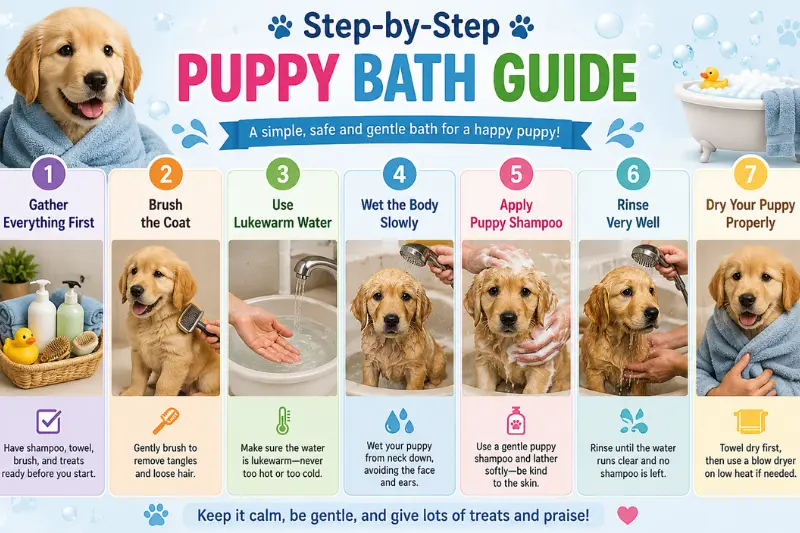
Bathing a puppy becomes much easier when you prepare before starting. A calm setup helps your puppy feel safe and makes the whole process smoother.
Step 1: Gather Everything First
Keep all supplies close before you bring your puppy to the bath area.
You will need:
- Puppy-safe shampoo
- Soft towels
- A brush
- A cup or handheld sprayer
- A non-slip mat
- Treats
- Cotton balls for outer ear protection
Step 2: Brush the Coat
Brush your puppy before adding water. This removes loose hair, dirt, and small tangles. If your puppy has long fur, brushing first helps prevent mats from getting tighter during the bath.
Step 3: Use Lukewarm Water
The water should feel warm, not hot. Puppies have sensitive skin, so hot water can cause dryness or discomfort. Cold water may scare them and make bath time stressful.
Step 4: Wet the Body Slowly
Start from the back and shoulders. Then move to the legs and belly. Avoid pouring water directly on the face, eyes, nose, or ears.
Step 5: Apply Puppy Shampoo
Use a small amount of shampoo. Gently massage it into the coat with your fingers. Do not scrub too hard because puppy skin is delicate.
Step 6: Rinse Very Well
Rinse until the water runs clear. Leftover shampoo can cause itching, dryness, and skin irritation.
Step 7: Dry Your Puppy Properly
Wrap your puppy in a soft towel and gently pat the coat. For thick or long fur, use a dryer on a low, warm setting if your puppy accepts it.
Step 8: Reward Your Puppy
Give praise and treats after the bath. This helps your puppy connect bath time with something positive.
Best Puppy Bath Products
Choosing the right bath products is very important for your puppy’s skin and coat health. Many cheap shampoos contain strong chemicals and artificial fragrances that may irritate sensitive puppy skin. A gentle puppy-safe product helps keep the coat clean without removing natural oils.
When shopping for puppy bath products, look for shampoos that are:
- mild and tear-free
- made for puppies
- free from harsh chemicals
- gentle on sensitive skin
- easy to rinse out
Ingredients also matter. Some natural ingredients can help soothe dry or itchy skin.
Good Ingredients to Look For
- Oatmeal for calming itchy skin
- Aloe vera for moisture
- Coconut-based cleansers for gentle cleaning
- Chamomile for soothing irritation
Avoid shampoos with:
- strong perfumes
- alcohol
- sulfates
- harsh dyes
These ingredients may dry out your puppy’s coat or cause irritation.
Besides shampoo, a few extra grooming products can make bath time easier.
Helpful Puppy Bath Supplies
- Soft towels for drying
- Non-slip bath mat for safety
- Puppy brush for removing loose fur
- Puppy wipes for quick cleaning
- Low-noise dryer for thick coats
Waterless puppy shampoo can also help between full baths. It freshens the coat without overbathing your puppy.
Always test a small amount of new shampoo first. If your puppy develops redness, itching, or irritation, stop using the product and speak with your veterinarian.
Puppy Bathing Tips Most Articles Miss
Many puppy bathing guides explain the basics, but they often skip small details that can make bath time safer, easier, and less stressful. These simple tips can improve your puppy’s experience and help avoid common problems.
Use a Non-Slip Surface
Puppies become nervous when they slide around in a tub or sink. Place a rubber mat or towel under their paws to help them feel stable and secure during the bath.
Keep Bath Time Short
Long baths can overwhelm young puppies. Try to keep the process quick and calm, especially during the first few baths. A short positive experience helps puppies build confidence.
Introduce Water Slowly
Do not suddenly spray water onto your puppy. Start gently with small amounts of lukewarm water so they can adjust without fear.
Protect the Ears Carefully
Water trapped inside ears can increase the risk of infections. Avoid pouring water directly near the ears, and gently dry the outer ear area after bathing.
Use Treats During the Bath
One trick many owners miss is using treats while bathing. Small rewards help distract puppies and create positive memories connected to bath time.
Bathe During Quiet Hours
Avoid bathing your puppy during noisy or stressful times. A calm environment helps your puppy stay relaxed.
Check the Paws and Skin
Bath time is the perfect chance to inspect:
- paw pads
- nails
- skin bumps
- fleas or ticks
- dry patches
Early detection can prevent bigger health problems later.
Do Not Forget Regular Brushing
Many puppies need brushing more often than bathing. Regular brushing removes dirt and loose fur, helping the coat stay cleaner between baths.
Let Your Puppy Relax Afterward
After the bath, give your puppy time to rest in a warm and comfortable place. Many puppies feel tired after grooming, especially after their first few baths.
Common Puppy Bathing Mistakes
Many puppy owners try their best to keep their pets clean, but small mistakes during bath time can lead to skin problems, fear, or discomfort. Knowing these mistakes can help you create a safer and healthier bathing routine for your puppy.
Bathing Too Often
This is the most common mistake. Frequent baths can remove the natural oils that protect your puppy’s skin and coat. Overbathing may lead to:
- dry skin
- itching
- redness
- flaky fur
Most puppies do not need weekly baths unless advised by a veterinarian.
Using Human Shampoo
Human shampoos are made for human skin, not dogs. They can change the skin’s natural balance and cause irritation. Always choose a shampoo made specifically for puppies.
Poor Rinsing
Many owners rush the rinsing step. Leftover shampoo trapped in the coat can irritate the skin and make puppies itchy after the bath.
Using Water That Is Too Hot or Too Cold
Very hot water can dry the skin, while cold water may frighten your puppy and make them uncomfortable. Lukewarm water is usually the safest choice.
Getting Water Inside the Ears
Too much moisture inside the ears may increase the risk of infections. Be gentle around the head and avoid pouring water directly into the ears.
Drying the Puppy Improperly
Leaving the coat damp for too long can cause:
- bad smells
- skin irritation
- fungal growth
Always dry your puppy carefully after bathing.
Making Bath Time Stressful
Shouting, rushing, or forcing your puppy into water can create fear that lasts for years. Calm handling, patience, and rewards help puppies feel safer during baths.
Ignoring Coat Type
Different coat types need different care. Some puppies need more brushing than bathing, while others require extra coat maintenance to prevent mats and tangles.
Avoiding these mistakes helps keep your puppy’s skin healthy and makes bath time a more positive experience for both of you.
How to Keep Puppies Clean Between Baths
Your puppy does not always need a full bath to stay clean and fresh. In fact, using gentle cleaning methods between baths can help protect the skin and reduce the risk of overbathing. These simple habits keep your puppy comfortable while helping the coat stay healthy.
Use Puppy Wipes
Puppy-safe wipes are great for quick cleanups after walks or playtime. They work well on:
- paws
- belly
- face
- tail area
Choose wipes made for dogs and avoid products with strong fragrances or harsh chemicals.
Wipe Dirty Paws After Walks
Outdoor walks bring mud, dust, pollen, and bacteria into your home. Keeping a soft towel near the door makes cleaning paws quick and easy.
Brush the Coat Regularly
Brushing removes:
- loose fur
- dirt
- small debris
- dead hair
It also spreads natural oils through the coat, helping fur stay shiny and healthier. Long-haired puppies may need brushing every day to prevent tangles.
Try Spot Cleaning
If only one small area is dirty, there is no need for a full bath. Use a warm damp cloth to gently clean muddy or sticky spots.
Use Dry Shampoo Carefully
Dry shampoo can freshen the coat between baths. Always use puppy-safe formulas and avoid overusing them because product buildup may irritate the skin.
Keep Bedding Clean
Dirty bedding can make puppies smell bad even after a bath. Wash blankets, beds, and soft toys regularly to help your puppy stay cleaner longer.
Maintain a Healthy Diet
Good nutrition affects coat health. Puppies eating balanced food often have healthier skin and cleaner-looking fur with less oil buildup.
These simple cleaning habits can reduce the number of full baths your puppy needs while keeping them fresh, comfortable, and healthy.
Seasonal Puppy Bathing Advice
Your puppy’s bathing needs can change throughout the year. Weather, temperature, humidity, and outdoor activity all affect how quickly your puppy gets dirty or develops skin problems. Adjusting the bathing routine by season helps keep the coat healthy and comfortable.
Summer Bathing Tips
Summer usually means more outdoor play, muddy parks, and extra dirt. Puppies may sweat less than humans, but heat can still cause oily fur and stronger odors.
During summer:
- outdoor puppies may need more frequent baths
- pollen and grass allergies can increase
- swimming may leave dirt or chlorine in the coat
After swimming, rinse your puppy with clean water to remove pool chemicals, salt, or lake bacteria.
Winter Bathing Tips
Cold weather can dry your puppy’s skin faster. Too many baths during winter may cause:
- itching
- flaking
- dry fur
Use moisturizing puppy shampoo during colder months and reduce unnecessary bathing when possible. Always dry your puppy completely before allowing them outside.
Rainy Season Care
Rainy weather often brings muddy paws and wet fur. Damp coats can trap bacteria and create unpleasant smells if not dried properly.
During rainy days:
- wipe paws after walks
- dry the belly and legs carefully
- brush wet fur to prevent tangles
Spring Allergy Season
Spring can increase pollen buildup in your puppy’s coat. Puppies with allergies may scratch more during this time. Gentle baths may help remove allergens from the fur and make your puppy more comfortable.
Adjust Baths Based on Activity
A puppy spending most winter indoors may need fewer baths than a puppy running outside daily during summer. Watching your puppy’s coat and skin condition is the best way to decide when a bath is truly needed.
Real-Life Puppy Bath Examples
Every puppy has different bathing needs depending on their breed, lifestyle, coat type, and daily routine. These real-life examples can help you understand how bathing schedules may change from one puppy to another.
Example 1: Indoor Apartment Puppy
Bella is a small Maltese puppy that spends most of her time indoors. She goes outside only for short walks and potty breaks. Because her environment stays clean, she rarely gets muddy or smelly.
Her owner:
- brushes her coat daily
- wipes her paws after walks
- gives a full bath every 4–6 weeks
This routine keeps Bella clean without drying out her skin.
Example 2: Active Outdoor Puppy
Max is a Labrador puppy that loves parks, mud, and outdoor play. He often returns home with dirty paws and dusty fur.
His owner:
- wipes him down after walks
- brushes loose dirt from the coat
- bathes him every 2–3 weeks
Since Max is very active, he needs more cleaning than indoor puppies.
Example 3: Puppy With Sensitive Skin
Luna is a puppy with mild skin allergies. Regular shampoos caused itching and redness.
Her veterinarian recommended:
- hypoallergenic puppy shampoo
- gentle medicated baths
- bathing only when necessary
After changing products, Luna’s skin became healthier and less irritated.
Example 4: Long-Haired Puppy
Charlie is a Shih Tzu puppy with thick long fur that tangles easily. Dirt often gets trapped in his coat.
His grooming routine includes:
- daily brushing
- regular trimming
- baths every 3 weeks
Without brushing, his fur quickly becomes matted.
These examples show that there is no single bathing schedule for every puppy. The best routine depends on your puppy’s coat, activity level, health, and environment.
FAQ About Puppy Bathing
How Often Should Puppies Be Bathed?
Most puppies should be bathed every 3 to 4 weeks. However, the ideal schedule depends on their age, coat type, activity level, and skin condition.
Can I Bathe My Puppy Once a Week?
Weekly baths are usually unnecessary unless your veterinarian recommends them. Bathing too often may remove natural oils and dry out your puppy’s skin.
What Is the Best Age for a Puppy’s First Bath?
Most puppies can safely have their first full bath at around 8 weeks old. Before that age, spot cleaning with a warm damp cloth is usually safer.
Can I Use Human Shampoo on My Puppy?
No. Human shampoo is made for human skin and may irritate a puppy’s sensitive skin. Always use a shampoo designed specifically for puppies.
Why Does My Puppy Smell Bad So Quickly?
Puppies can develop odors from:
- outdoor play
- wet fur
- dirty bedding
- skin oils
- trapped moisture
Regular brushing and cleaning between baths can help reduce smells.
How Long Does a Puppy Bath Take?
A simple puppy bath usually takes around 10 to 20 minutes, depending on coat length and your puppy’s comfort level.
Should I Brush My Puppy Before Bathing?
Yes. Brushing before a bath removes loose fur, dirt, and tangles, making the bathing process easier and more effective.
Is It Safe to Use a Hair Dryer?
Yes, but only on a low warm setting. High heat may scare your puppy or dry out the skin. Keep the dryer at a safe distance.
What Should I Do If My Puppy Hates Baths?
Start slowly and stay calm. Use treats, praise, and short bath sessions to help your puppy build positive feelings about bath time.
How Can I Keep My Puppy Clean Between Baths?
You can use:
- puppy wipes
- regular brushing
- spot cleaning
- dry shampoo
- paw cleaning after walks
These methods help reduce the need for frequent full baths.
Final Thoughts
Knowing how often puppies should be bathed is an important part of keeping your furry friend healthy and comfortable. Most puppies do best with baths every few weeks rather than frequent washing. The right schedule depends on your puppy’s age, coat type, activity level, and skin condition.
Bathing too often can dry out the skin and damage the coat, while waiting too long may lead to dirt buildup, odors, and irritation. The goal is to find a healthy balance that keeps your puppy clean without removing the natural oils that protect their skin.
Pay attention to signs like muddy fur, strong odors, greasy coats, or allergy buildup instead of following a strict bathing routine. Gentle puppy-safe products, proper drying, and regular brushing can make a big difference in your puppy’s overall hygiene and comfort.
Most importantly, make bath time calm and positive. Puppies that feel safe during baths often grow into adult dogs that are easier to groom and handle. With the right care and routine, bath time can become a healthy and stress-free part of your puppy’s life.
